
Sometimes a tooth problem looks “small” on the outside,but it is getting “weake”r on the inside. That is the reason for many people’s confusion when they hear “You might need a crown” and ask “Can’t you just put a filling and finish it?”
Yes,a dental filling is perfect in many cases.But, when a tooth loses its strength, a filling can act like a quick patch on a wall that’s already cracking. It will secure for a short time, but it will not protect the tooth long-term.So, a dental crown is the best choice to secure the tooth from splitting, breaking, or turning into an emergency later.
Here we can see the real-life symptoms that inform you when a tooth needs a crown vs filling, and why dentists recommend one over the other.
Filling vs Crown: what’s the real difference?
A filling repairs the part of the broken tooth. The dentist removes the decay, cleans the area, and fills it with a powerful substance that will cure it.
A filling works effectively when the tooth has strong walls and good enamel to hold it in place.
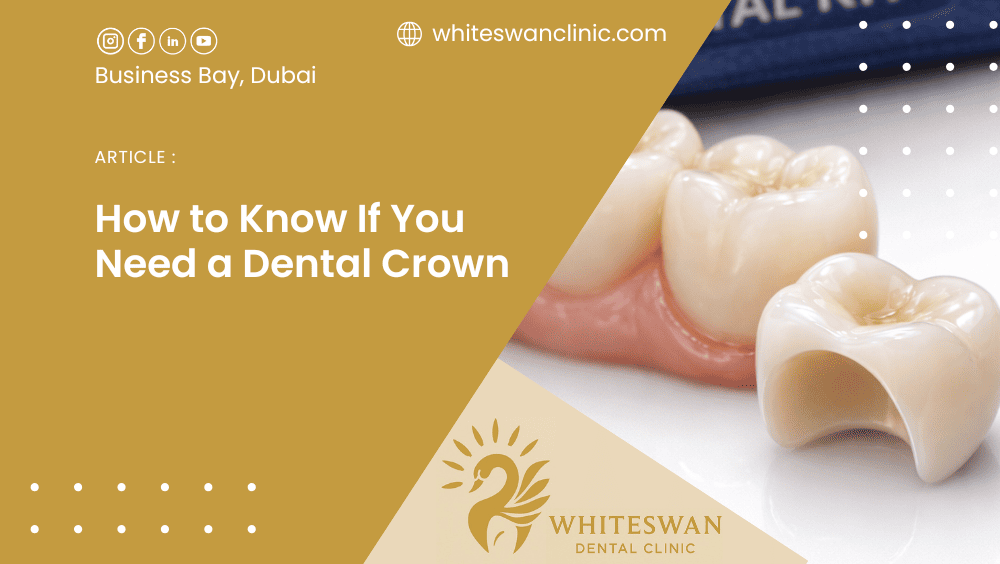
A crown fits over the tooth.It keeps the whole tooth safe from biting pressure and stops weak spots from bending or breaking.
An easy way to imagine it:
- A filling is like repairing a pothole.
- A crown is like resurfacing and strengthening the whole road section.
Both are useful. The “right” one depends on tooth strength, not just the size of the hole. Get details on Dental Clinic in Business Bay.
Signs you may need a Dental Crown (and not only a filling)
1) The cavity is large or the tooth wall is thin
A filling works great if the cavity is small. But when decay spreads or gets deeper, the walls of the tooth start to thin. Thin tooth walls don’t like chewing pressure. They can crack without warning.
That’s why dentists commonly recommend a crown for a large cavity because it fixes the whole tooth instead of just one part.
2) You already have a big old filling
Older fillings could weaken the tooth over time. The filling itself might be okay, but the tooth around it becomes fragile. If you’ve had the same tooth filled again and again, you may notice it feels “delicate” or sensitive.
In this case, a crown can stop the cycle of: filling → break → bigger filling → break again. Looking to a Best Dental Clinic for Teeth Filling?
3) Pain when chewing… but it disappears afterward
This one is very common. Many people say that “It hurts when I bite on it, but after that it feels okay.”
That could be a symptom of a crack or a weak cusp. The tooth bends a little when you bite it. That movement can trigger pain.
A filling can’t always stop that flexing. A crown for cracked tooth often can, because it holds the tooth firmly together.
4) Sensitivity that won’t settle down
It might not be a big deal if you really feel cold for a second or two. But if you sense sensitivity that doesn’t go away or severe pain that becomes worse, it could signal more serious harm.
But if the tooth is poor in structure, a crown may be suggested to better seal and protect it.
5) The tooth is cracked, chipped, or has a broken corner
Small chips can sometimes be treated with bonding. But when a chunk breaks off from a chewing tooth, or when there’s a visible crack line, the tooth is at higher risk of splitting further.
Crowns are often chosen here because they prevent the tooth from opening up under pressure.
6) You had a Root Canal Treatment
A tooth after a root canal can still function well. But it’s usually weaker than before, especially the back teeth. Molars take heavy pressure every day, and a root canal tooth is more likely to fracture without protection.
This is the reason that dentists recommend a crown after root canal, specfically,on molars and premolars.
7) Your filling keeps falling out or the tooth keeps re-decaying
If a tooth needs repair in the same spot continuously, it could be your bite, the size of the cavity, or simply that the tooth doesn’t have enough healthy structure left.
At that point, a crown becomes the “stronger rebuild,” instead of another patch.
8) You grind or clench your teeth (bruxism)
If you clench at night, teeth take a lot of force. Fillings can crack, edges can chip, and tooth walls can split. Grinding also wears teeth down and makes them flatter.
In many cases, a crown can restore the tooth’s strength—and a night guard helps protect it after. Get details on Root Canal Treatment in Business Bay.
When a filling is usually enough
A filling is often the best option when:
- the cavity is small to moderate
- the tooth has thick, solid walls
- there is no crack
- it’s the first or second time the tooth needs treatment
- bite forces are not extreme
So yes,fillings are not “inferior.” They’re simply designed for different situations.
What if you choose a filling when a crown is needed?
Some people delay crowns because they want the cheaper option. That’s reasonable. It’s still good to know what could happen.
If a weak tooth is treated with a big filling, it may:
- crack while chewing (even on soft food)
- break below the gum line (harder to save)
- start hurting suddenly and need urgent care
- end up needing a root canal or extraction
In other words: the filling may not fail because the dentist “did it wrong.” It fails because the tooth wasn’t strong enough for a filling to begin with. Get details on Dental Crowns.
How dentists decide between Crown vs Filling
At White Swan Dental Clinic, dentists look at a few practical things before recommending a crown:
- How much healthy tooth is left (if it thin walls means it’s a high risk)
- Which tooth it is ( molars take more pressure)
- Existing repairs (large or old fillings weaken teeth)
- Cracks and bite pain (especially sharp pain on chewing)
- Root canal history (often needs full coverage)
- Grinding habits (crowns may be safer with protection)
The clinical check is just as important as the X-rays.Sometimes the tooth “looks okay” in a photo, yet it’s painful under pressure. That’s where experience and bite checks come in.
What a crown procedure usually looks like
Most crowns follow these steps:
- Examination + X-ray
- Removing decay and shaping the tooth
- Digital scan or impression
- Temporary crown (if required)
- Final crown cementation + bite adjustment
A crown should feel like part of you after it has been placed on, not heavy or strange. You could feel a little sensitive at first, but it must fade away.
Quick self-check: Do you likely need a crown?
If you’re planning to get a dental crown, you should be leaning to it.
- “My cavity is big.”
- “That tooth already has a large filling.”
- “It hurts when I bite.”
- “A corner chipped off.”
- “I had a root canal there.”
- “My fillings don’t last in that tooth.”
- “I grind my teeth.”
If none of these apply, a filling might be enough.
Related Articles:
» Loose Crown or Bridge: What To Do Immediately?
» Tooth Swelling & Infection: When to Seek Immediate Care
» Dental Checkup in Dubai: What’s Included and How Often You Need It?
» Implant Maintenance: Hygiene Tips for Long-Term Success
» Dental Implants in Dubai: Restoring Your Smile with Precision
Protecting Your Tooth with a Dental Crown
Filling is a great way to repair a tooth.But if the tooth is weak because of a big hole, cracks, a heavy bite, or previous treatment, a dental crown will be the best way to secure it from breaking even more.
FAQs on “How to Know If You Need a Dental Crown”
Of course you can, but if the tooth is weak, the filling could break, which would cause bigger problems.
Not always. Crowns are also used when a tooth is likely to crack, even if the decay isn’t massive.
Yes. When you chew, you might feel pain because of cracks or weak cusps. A crown can help secure the tooth.
Yes, it often helps especially if sensitivity is caused by cracks or weak walls in the teeth. But before that you need to consider the right diagnosis for sensitivity.
Teeth that have had root canals might become weak, especially molars. So crowns help to secure teeth from breaking.
Crowns may last for many years if you clean and floss well and consult the dentist regularly. Grinding can shorten lifespan if not handled.
Not generally because local anesthesia has been used. It is normal to feel a little painful.
Sometimes you can bind little chips together, but deeper gaps need full coating to stop them from spreading.
Delaying can make the chance of breaking a tooth higher. If a tooth breaks very deeply, it’s difficult to save.
Yes. Modern crowns are made to match the color and shape of your teeth, especially if you plan in advance.
Yes, because it covers the entire tooth and spreads chewing force more evenly.
Brush your teeth twice a day, floss correctly, avoid to chew ice, and wear a sleep guard are the best way to protect the crown after the placement.