
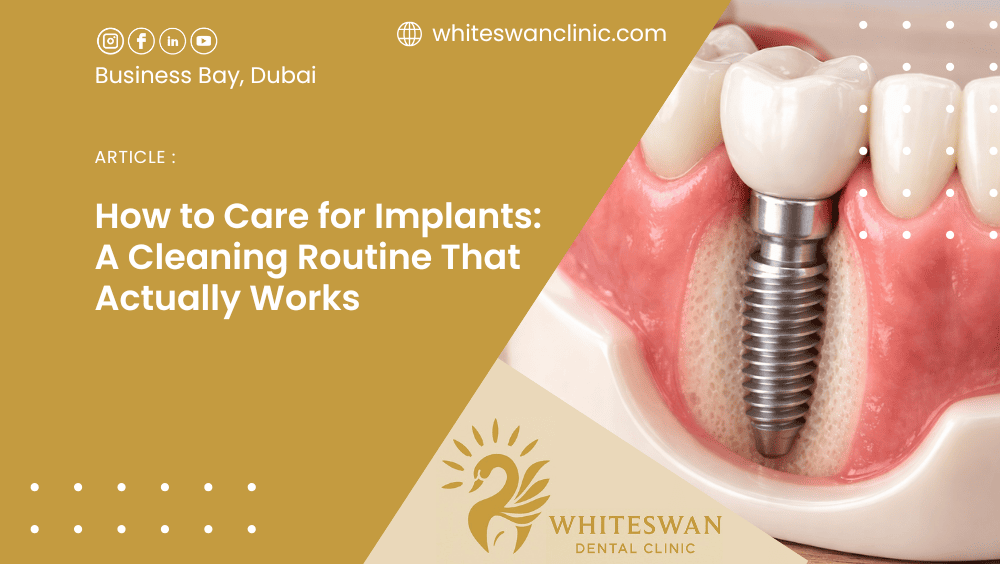
Once you are accustomed to the dental implants, they will feel and behave like normal teeth. So it’s easy to think they will look after themselves. But implants still require daily care — because while an implant crown can’t develop a cavity, the gums and bone surrounding it can become inflamed if plaque accumulates.
At White Swan Dental Clinic, we see this time and again: people give the implant a good scrub like they would a normal tooth, but they miss out on the gumline bits and in-between space. Then bleeding, bad taste or gum swelling can appear over time. The good news is this: A consistent routine (not a complex one) will help keep implants clean and comfortable for years.
This guide breaks down a realistic dental implant cleaning schedule that is congruent to real life—morning, bedtime, and everything in between. It also covers what tools help most and what to do if something feels “off”.
Why implants need a slightly different cleaning approach
A crown on implant is cemented in place and closely approximates the gum tissue. That edge where the crown meets the gum is plaque’s primary danger zone. When plaque sticks around, the tissue can become inflamed.
You may hear terms like:
- Peri-implant mucositis: inflammatory condition of gums, which around the implant (early stage).
- Peri-implantitis:deeper infection that can cause bone loss (more severe)
You do not have to remember the names. Just bear this in mind: Implant care is gum care. Protect the washer, and you protect the implant. Get details on Dental Clinic in Business Bay.
The “routine that works” mindset
A routine only works if you can actually do it daily. So instead of an extreme plan, focus on four habits:
- Brush gently and thoroughly twice a day
- Clean between teeth/implants once a day
- Keep the mouth hydrated and reduce food traps
- Get professional implant maintenance regularly
If those four happen consistently, you’re doing better than most people. Looking for a Root Canal Treatment in Dubai?
Morning implant routine (3–5 minutes)
1) Brush with purpose, not pressure
Start with a soft toothbrush or an electric brush with a soft head. Either is fine. The real difference is technique.
- Aim the bristles toward the gumline
- Move slowly around the implant crown
- Use light pressure (hard scrubbing irritates gum tissue)
A typical mistake is going over the top chewing surface thoroughly while speeding past the gumline. The bacteria are at the gumline, so pay that a little more mind.
2) Quick rinse (optional)
If you’re a coffee/tea drinker, or wake up in the morning with a dry mouth, rinsing your mouth out with water could help. It’s not a stand-in for brushing, but it does freshen and reduces stickiness.
Midday habit (30 seconds that helps)
You don’t need a full cleaning routine in the middle of the day. However, if you get food stuck easily, try this:
- Rinse with water after meals
- If you’re out, sugar-free gum can stimulate saliva (saliva naturally protects gums)
This is especially useful if you have an implant bridge or multiple implants. Less trapped food = less irritation. Get details on Dental Checkup in Business Bay.
Night implant routine (the one that matters most)
If you only improve one part of your day, improve the night routine. Night-time cleaning prevents plaque from sitting for hours while you sleep.
Step 1: Clean between implants (choose the tool that suits your mouth)
There isn’t one “perfect” method for everyone. The best option depends on whether you have a single implant crown, multiple implant crowns, or a bridge.
Option A: Implant-friendly floss (soft, thicker floss)
Implant floss is often slightly “spongy” or thicker than regular floss. It can clean along the gumline without snapping into the gum.
This works well for many single implants.
Option B: Interdental brushes
Interdental brushes can be brilliant, but size matters. If the brush is too big, it can cause gum soreness. If it’s too small, it won’t clean effectively.
Use a brush that fits snugly without forcing.
Option C: Water flosser (excellent for bridges and tight spaces)
A water flosser is a strong choice if you:
- Have implant bridges
- Have limited dexterity
- Find string floss frustrating
- Get food stuck often
Direct the water towards the gums and floss bridged areas where food can get caught.
Step 2: Brush for a full two minutes
Now brush as you would normally — outside, inside, chomp surfaces — but ease up around the implant crown.
If you’re an electric-brusher, direct the toothbrush to each individual tooth rather than zipping around haphazardly. Steady slow strokes is what you need to remove plaque.
Step 3: Clean your tongue
Many of the reports of “bad taste” were due to tongue bacteria, not from the implant. A tongue scraper or the soft brushing of your tongue, 10 seconds and it’s a big difference.
Step 4: Mouthwash (only if it suits you)
A gentle rinse can refresh. Skip the alcohol-strong mouthwash if it drys out your mouth. Besides, don’t use mouthwash as your primary cleaning method–plaque doesn’t disappear on its own (brushing + interdental cleaning). Looking for a Teeth Whitening near Business Bay?
What products are safe for dental implants?
Implants usually respond best to gentle, consistent products.
Toothbrush
- Soft manual brush, or
- Electric brush with soft head
Toothpaste
- Fluoride toothpaste is generally ideal
- Avoid harsh abrasive whitening pastes if your gums are sensitive
Interdental cleaning tools
- Implant floss / soft floss
- Interdental brushes (correct size)
- Water flosser (especially for bridges)
If you’re unsure what is best for your implant shape, we can check the area and recommend tools that match your spacing.
Common implant care problems (and what to do)
“My gums bleed when I clean”
This isn’t unusual, especially if getting into the habit of flossing (or using a water flosser) or interdental cleaning has been sporadic at best. Bleeding is generally indicative that your gum is inflamed.
What helps:
- Gentle brushing (no scrubbing)
- Daily interdental cleaning
- A professional clean if bleeding lasts beyond 10–14 days
If bleeding is heavy, painful, or increasing, don’t wait—get it checked.
“There’s a smell or bad taste near the implant”
This can happen when food gets trapped under a crown edge or bridge. It can also be plaque sitting at the gumline.
Try:
- Water flossing at night
- Interdental cleaning daily
- A dental review to check for hidden traps or inflammation
“Food keeps getting stuck”
Food trapping isn’t always your fault. Sometimes crown or bridge contours create small collection points. In some cases, a simple adjustment improves comfort and makes home cleaning easier. Get details on Teeth Cleaning and Polishing.
Weekly habits that keep implants strong
These small habits reduce long-term issues:
- Replace brush heads when bristles flare
- Wash flosser tips and allow to dry.
- Inspecting your gums (redness, swelling or recession) in the mirror
- Wear your night guard if you grind your teeth
Grinding can overload implants and crowns. So if you’ve been advised to use a guard, it’s part of implant care too.
Why regular professional maintenance matters
Despite the best home care, hardened plaque can accumulate in places that you don’t clean well. Professional maintenance promotes healthy gum and bone around implants.
During an implant evaluation or hygiene appointment, we will:
- Check gum health around the implant
- Measure pocket depth
- Remove hardened deposits safely
- Check your bite and crown fit
- Improve your home technique with tiny, practical tips
A small change in brushing angle or interdental tool size can make a big difference.
Related Articles:
» Dentures vs Implant-Supported Dentures: Comfort and Stability
» Dental Implants in Dubai: Step-by-Step Process
» Root Canal vs Extraction + Implant: How to Decide?
» Implant-Supported Dentures Benefits
» Implant Maintenance: Hygiene Tips for Long-Term Success
A quick do’s and don’ts list
Do
- Brush twice daily
- Clean between implants daily
- Focus on the gumline, not just the crown surface
- Use a water flosser if you have bridges or food traps
- Book regular implant maintenance appointments
Don’t
- Don’t scrub hard
- Don’t stop cleaning because of mild bleeding
- Avoid using sharp objects to dislodge any trapped food
- No loosening, swelling or pus allowed
When you should book an urgent check-up
Call your dentist if you notice:
- Implant crown feels loose
- Pain that’s getting worse
- Swelling, pus, or persistent bleeding
- Sudden bite changes
- Gum recession around the implant
Early intervention prevents the bone from being destroyed, and keeps the implant secure.
FAQs on “How to Care for Implants”
Brush 2 times each day, and once per day clean between teeth/implants.
The implant crown cannot get a cavity, but plaque can collect leading to gum infection.
Yes. So long as you use a soft head and light pressure, it can be very beneficial.
Implant-friendly soft floss works well for many cases.Bridges may require a floss threader or water flosser.
Not always. But it’s super for bridges, close spots and food traps.
Yes, if the size is correct. It can irritate the gums to force a big brush.
Bleeding usually means inflammation. Regular, gentle cleaning and professional help can become the solution.
Mouthwash helps with freshness, but it doesn’t clean plaque away like brushing and flossing.
Usually, a fluoride toothpaste that isn’t too abrasive is best.
Water flossers, floss threaders and bridge flosses can work — go with what works for your bridge design.
That will depend on your risk factors, but professional maintenance is important.
If there’s ongoing bleeding, swelling, pus or ooze, bad taste, pain or looseness — make an appointment soon.