
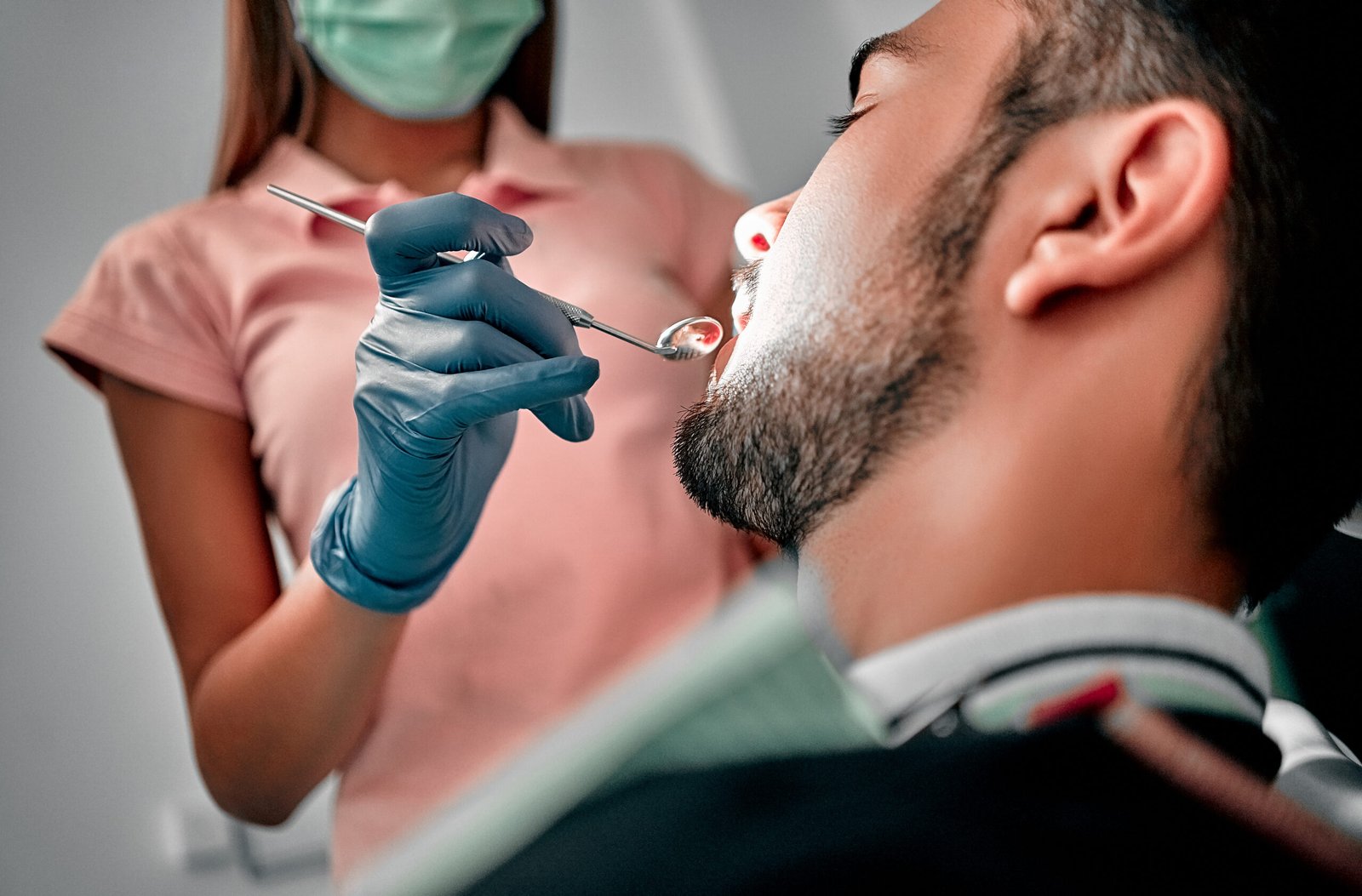
Maybe it has been three years. Maybe seven. Maybe long enough that you stopped counting.
You have no major toothache, but one tooth feels different. Your gums occasionally bleed. An old filling catches your tongue. Or perhaps nothing hurts, and you simply know it is time to return.
For many people, the hardest part of booking a dentist after a long gap is not the examination. It is the uncertainty.
“What if they found everything wrong at once?”
A useful dental checkup shouldn’t start by turning that uncertainty into a long treatment list. It should first answer a simpler question:
Where does your oral health stand today?
That is the purpose of the first visit back. Before deciding what needs treatment, the dentist needs a reliable baseline: what is healthy, what’s changed, what needs attention now, and what can simply be watched.
Think of it as a baseline reset, not a verdict on the years you were away.
The First Visit Back Is an Information Visit Before It Is a Treatment Visit
After several years, there may be very little to address or several things worth discussing. The dentist cannot know which until they properly assess the mouth.
Symptoms and appearance do not reveal the full picture. Early decay may not hurt, gum inflammation can progress quietly, and an old restoration may still be functioning well despite its age.
A good dental examination therefore builds evidence rather than assuming a long gap means extensive treatment.
Baseline 1: What Has Changed Since Your Last Visit?
The assessment starts before the dentist examines a tooth.
You may be asked about pain, sensitivity, swelling, bleeding gums, changes in existing fillings or crowns, grinding or clenching, medical conditions, medications, and your current home-care routine.
This history gives the examination direction. Pain when biting suggests a different investigation from general cold sensitivity, while bleeding gums change the focus of the gum assessment.
A first dental visit after a long break is partly about reconstructing what has changed since the last reliable snapshot of your oral health.
Baseline 2: Healthy Teeth Matter as Much as Problem Teeth
A checkup is not simply a search for cavities.
The dentist looks for decay, fractures, wear, and other changes, but they also assess existing dental work.
Old fillings and crowns aren’t automatically replaced just because they are old. What matters is how they function now: whether they remain intact, whether the surrounding tooth is healthy, and whether anything has changed enough to justify intervention.
For returning patients, the question is not:
“How much dentistry can we find?”
It is:
“What is healthy, what is stable, and what genuinely needs attention?”
Baseline 3: Your Gums Need Their Own Assessment
Teeth often receive most of the attention, but the gums and supporting tissues are a separate part of oral health.
A gum health check may look for inflammation, bleeding, and other findings that could justify closer assessment or professional cleaning.
Gum problems can develop with little discomfort, and occasional bleeding during brushing shouldn’t be assumed to be normal.
The first visit back should therefore establish both the condition of individual teeth and the health of the tissues supporting them.
Baseline 4: X-Rays Should Answer a Question, Not Tick a Box
Many returning patients assume that a long gap automatically means a full set of X-rays.
Not necessarily.
Dental imaging can reveal information you can’t always see directly, including areas between teeth or around roots and existing restorations. But select imaging based on clinical need rather than treating it as automatic at every appointment.
The dentist may consider your symptoms, dental history, previous images if available, current examination findings, and risk factors before deciding whether an X-ray would add useful information.
That makes dental X-rays part of a targeted diagnostic process rather than a routine formality.
If you already have recent images from another clinic, mentioning them can be useful.
The principle is simple: use imaging when it helps answer a clinical question.
Baseline 5: Look for Patterns, Not Just Individual Problems
A single damaged tooth may be an isolated problem. Several similar findings can tell a wider story.
Multiple worn teeth may raise questions about grinding or repeated bite forces. Decay appearing in similar areas can lead to a discussion about risk factors and cleaning habits. Repeated fractures around large restorations may shape future repair plans.
This is where a routine dental checkup becomes more valuable than treating whichever tooth hurts first. The dentist asks not only, “What needs fixing?” but also, “Why might this be happening?”
That is where treatment and prevention begin to connect.
Not Everything Found Has the Same Urgency
This is where many people expect the worst.
Suppose several findings appear during the checkup. That doesn’t mean every item needs immediate treatment.
A useful discussion can divide findings into three practical groups:
Treat Now
Problems where delay could meaningfully increase the risk of pain, infection, structural damage, or another complication.
Treat Soon
Issues that need treatment but allow reasonable planning rather than emergency intervention.
Monitor
Findings that are stable enough to review over time instead of treating immediately.
This Treat Now → Treat Soon → Monitor framework is far more useful than leaving with an undifferentiated list of dental terms.
A Treatment Plan Should Have an Order, Not Just a Price
When more than one issue is found, sequence matters.
Pain or infection may take priority. Active disease may need attention before elective cosmetic work. Gum health may affect the timing of other treatment.
A useful treatment discussion should therefore explain:
- what was found
- why it matters
- what should happen first
- what can wait
- what can be monitored
- what options are available
Understanding the order is more useful than receiving only a list of procedures and a total.
A Dental Checkup and Cleaning Are Not the Same Thing
They are often booked together, so the distinction is easy to miss.
A dental checkup is the examination and diagnostic part of the visit. It assesses the condition of your teeth, gums, and mouth and identifies anything that needs further attention.
Cleaning, or scaling, is a separate procedure focused on removing deposits such as plaque and hardened tartar, where appropriate.
Some patients may have both in the same visit. Others may need an exam first so we can decide on the right cleaning or gum-care plan.
If you haven’t visited in years, “I just need a cleaning” may not tell the whole story.
The checkup establishes what you actually need.
What If You Feel Embarrassed About How Long It Has Been?
This matters because embarrassment can keep people away even longer.
You do not need to defend the gap.
People postpone dental visits for many reasons. The useful question now is what your mouth needs today.
If you are nervous, mention it when booking or at the start of the appointment. If you prefer each step to be explained before it happens, say so.
A productive dentist appointment depends on clear communication, especially when you are returning after a long absence.
How to Prepare for the First Appointment Back
You do not need a perfect dental history, but a few details can help:
- current medications and relevant health information
- where and when you feel pain or sensitivity
- major previous dental treatment you remember
- recent dental records or X-rays if you already have them
- questions you want answered before leaving
It also helps to identify your main concern: one tooth, bleeding gums, an old restoration, or simply restarting routine care.
How Often Should You Return After That?
Your first return appointment doesn’t automatically put everyone on the same schedule.
The appropriate interval depends on factors such as the condition of your teeth and gums, your risk of future problems, existing restorations, and anything being monitored.
Someone with stable oral health may need a different interval from someone who requires closer follow-up.
Your next dental checkup in Dubai should therefore be based on your findings rather than a one-size-fits-all calendar rule.
The Best Outcome of the First Visit Back Is Clarity
After years away, it is easy to imagine that the dentist will immediately start listing everything that is wrong.
A better dental checkup does something more useful first.
It rebuilds the map:
What is healthy?
What has changed?
What needs attention now?
What can be planned?
What can be watched?
Once you answer those questions, the situation becomes far less uncertain.
You no longer have “years of unknown dental problems.”
You have a baseline and a next step.
For patients returning to dental care in Business Bay or looking for a dental checkup near me in Dubai, White Swan Dental Clinic provides checkups for new and returning patients, with findings and next steps discussed based on your examination.
FAQs
What happens if I have not been to the dentist for several years?
The dentist will first establish your current oral-health baseline by reviewing your history and examining your teeth, gums, and mouth. They can then consider imaging or further assessment based on what they find.
Will I need dental X-rays at my first checkup back?
Not automatically. We generally consider X-rays when they can provide useful information beyond the clinical examination. Your history, symptoms, previous images, and current findings help guide that decision.
Is a dental checkup the same as teeth cleaning?
No. A checkup focuses on examination and diagnosis, while cleaning removes plaque and hardened deposits. They may happen during the same visit, but they serve different purposes.
What if the dentist finds several problems?
The dentist can prioritize the findings rather than treat them as equally urgent. A clear plan should explain what needs attention now, what can wait, and what may only need monitoring.
How often should I have a dental checkup?
There is no single ideal interval for everyone. Your dentist can recommend a recall schedule based on your oral health, risk factors, existing dental work, and any