
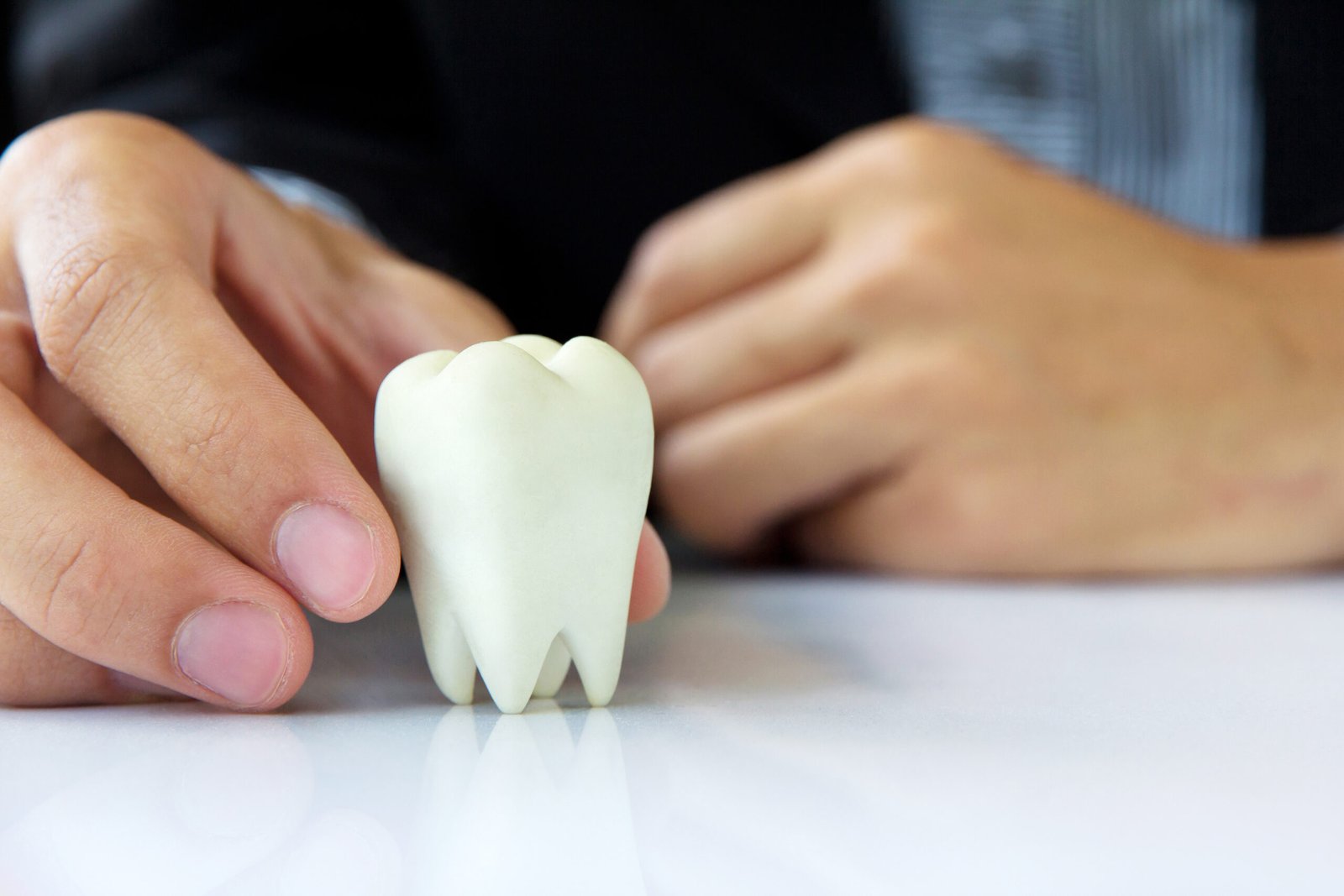
A missing corner of a tooth can look dramatic and still be relatively straightforward to repair. Another tooth may look almost normal, yet send a sharp pain through your jaw every time you bite.
That contrast is what makes a cracked tooth so deceptive.
The visible line, chip, or broken edge does not always tell you how far the damage extends, whether the tooth has become structurally weak, or whether the pulp inside has been affected. Two teeth that look similar in the mirror can therefore need disparate treatment.
The better question is not simply:
“How big is the crack?”
It is:
“What important structures has the damage crossed?”
That is the question behind a sensible repair plan.
Why the Surface Can Be Misleading
A tooth is built in layers. Enamel forms the hard outer shell. Beneath it sits den tine, and deeper still is the pulp, which contains nerves, blood vessels and connective tissue. Below the gum, the roots anchor the tooth within its supporting tissues.
A fracture can involve these layers differently. A fine enamel line may be harmless, while a deeper crack may reach the pulp or extend below the gum-line.
That is why cracked tooth treatment cannot be selected from appearance alone. Dentists must assess both visible damage and the remaining structure.
The Structural Boundary Test
A practical way to understand the assessment is to think in four boundaries.
1. Has the Damage Stayed Superficial?
Some minor chips or enamel lines do not significantly weaken the tooth.
If the damage is limited and the remaining structure is strong, treatment may be relatively conservative. Depending on the location and the patient’s needs, the dentist may consider smoothing a rough edge, bonding, or another small restoration.
But “small” does not automatically mean “unimportant.”
The next question is whether the tooth has lost meaningful structural support.
2. Has the Tooth Become Mechanically Weak?
Back teeth carry heavy chewing forces. Teeth with large existing fillings may also have less natural structure remaining than they appear from the outside.
If a cusp fractures or a crack undermines a significant part of the tooth, replacing the missing piece alone may not be enough.
The dentist may assess how much sound structure remains, whether part of the tooth flexes under pressure, whether an old filling has weakened the surrounding tooth, and where chewing forces are concentrated.
That is why some broken-tooth repairs need more than a simple filling. A crown or another stronger restoration may sometimes be considered when the remaining tooth needs additional protection.
3. Has the Crack Affected the Pulp?
This is one of the most important turning points.
The pulp lies in the center of the tooth. If a crack reaches or irritates it, symptoms can include temperature sensitivity, pain while biting, pain when pressure is released, spontaneous toothache, or tenderness.
But symptoms can be inconsistent.
A cracked tooth may hurt only when the patient bites on one particular point. The pain may disappear for days and return unexpectedly.
That is why neither pain nor the absence of pain can determine the diagnosis by itself.
If the pulp has become irreversibly inflamed or infected and the tooth is still restorable, root canal treatment may be needed before the final protective restoration.
4. Does the Damage Extend Into a Poorly Restorable Area?
A crack that reaches well below the gum or involves the root differs greatly from a small fracture limited to the visible crown.
The dentist therefore has to consider prognosis as well as repair:
“Is there enough healthy tooth structure left to restore this tooth predictably?”
A tooth split into separate segments may have a disparate outlook than one with an incomplete crack. In severe cases, we may discuss extraction if the tooth cannot be restored predictably.
The goal isn’t to perform the biggest possible repair.
The goal is to choose the option that makes clinical sense for the remaining structure.
Why Biting Pain Can Be an Important Clue
A cracked tooth may feel normal most of the time, then hurt sharply when you chew or release pressure.
Because the pain can appear only at one point in the bite, patients may struggle to identify the exact tooth.
That pattern can become an important clue during examination.
It also explains why cracked-tooth pain can be easy to dismiss. If the discomfort disappears once you stop chewing on a particular area, the problem can feel temporary even though the structural damage remains.
How Dentists Investigate a Suspected Crack
No single test identifies every cracked tooth.
Diagnosis often comes from combining several clues.
Symptom History
When does the pain occur? Is it triggered by biting, cold, heat, or release of pressure? Does it linger?
The pattern helps the dentist understand which parts of the tooth may be involved.
Visual and Bite Examination
The dentist checks for fracture lines, missing structure, old restorations, decay and wear.
Applying controlled pressure to different parts of the tooth may also reproduce the characteristic pain and identify the involved area.
Light, Magnification and Gum Assessment
Trans-illumination can sometimes make a crack easier to identify because the fracture interrupts the way light travels through the tooth.
Gum findings may also clue you into the direction or extent of a fracture.
Dental Imaging
Dental X-rays are important, but a fine crack may not always be directly visible on a standard image.
Imaging can still reveal useful information about decay, existing restorations, roots, bone changes, and other conditions that affect treatment.
That is why diagnosing a tooth fracture often means assembling evidence rather than finding one obvious line on an X-ray.
Chipped, Broken and Cracked Teeth Are Not the Same Problem
Patients often use these words interchangeably, but they can describe different structural situations.
A chipped tooth usually involves a small visible loss of structure.
A broken tooth may involve more of the crown or a cusp.
A cracked tooth can remain largely intact while a fracture line travels through it.
A split tooth is more advanced, with sections that can separate.
These differences matter because the most dramatic-looking tooth is not always the most difficult to treat.
A small-looking crack can sometimes be more important than a larger visible chip.
When Is a Filling Enough?
A filling or bonding restoration can work when the damage is limited, and the remaining tooth is strong enough to support it.
But a filling does not automatically solve every crack.
If the tooth is flexing, has lost significant support, or faces heavy bite forces, simply replacing missing material may not address the underlying weakness.
That is where stronger coverage may be considered.
A dental crown can sometimes protect a tooth by covering and reinforcing the remaining structure. If the pulp has also been damaged, root canal treatment may need to come first.
The right restoration therefore depends on the tooth’s structure, not on choosing the smallest or largest treatment by default.
Can a Cracked Tooth Heal on Its Own?
No. Hard tooth structure doesn’t fuse back together as bone can.
Once a crack has formed, treatment focuses on managing the damaged structure, protecting the tooth where possible, and addressing any pulp involvement or infection.
Repeated chewing forces may let some cracks progress, making the tooth harder to restore later.
Early assessment doesn’t mean every crack needs major treatment. It means you can evaluate the problem before it worsens.
What Should You Do Before Your Dental Visit?
If you think you have chipped, cracked, or broken a tooth:
- avoid chewing hard foods on that side
- keep any broken fragment and bring it to the appointment
- avoid repeatedly testing the tooth by biting on it
- arrange a dental assessment even if the pain settles
Do not assume that reduced pain means the crack has healed.
Tooth structure does not repair itself, and symptoms can fluctuate.
When Is a Cracked or Broken Tooth Urgent?
A new crack, significant chip, or broken tooth should be assessed promptly, especially if there is pain, sensitivity, or difficulty chewing.
More urgent dental attention may be needed when there is significant facial or gum swelling, severe or rapidly worsening pain, uncontrolled bleeding after trauma, a tooth that has become loose or displaced, swelling with fever or feeling unwell, or major trauma affecting several teeth.
If you are unsure how urgent the situation is, it’s safer to contact a dental clinic for triage than to rely on appearance alone.
The Best Repair Starts With the Right Diagnosis
When you look at a damaged tooth, you naturally focus on what you can see.
The dentist has to look beyond it.
They need to know how much healthy structure remains, whether the pulp is affected, how far the damage extends, and whether the repaired tooth can withstand normal function.
That is why two similar-looking teeth may leave the clinic with very different plans: bonding, a stronger restoration, root canal treatment followed by protection, or in severe cases, a different prognosis altogether.
The treatment is not chosen because the tooth looks dramatic.
We choose it based on what the damage has actually crossed.
For patients in Business Bay and nearby areas looking for assessment of a chipped, broken, or cracked tooth, White Swan Dental Clinic can examine the damage and discuss the treatment options appropriate to the individual tooth.
FAQs
How do I know if I have a cracked tooth?
Common signs include sharp pain while chewing, pain when releasing a bite, and sensitivity to hot or cold. Some cracks cause few symptoms, so a dental examination is needed to confirm the cause.
Does every cracked tooth need a crown?
No. Treatment depends on the damage’s location and extent and how much healthy structure remains. Minor defects may need limited repair, while weaker teeth may require greater protection.
Can a cracked tooth need root canal treatment?
Yes, but not every cracked tooth does. Root canal treatment may be needed if the pulp has become irreversibly inflamed or infected and the tooth can still be restored.
Can an X-ray always show a cracked tooth?
No. Fine cracks may not be directly visible on a standard dental X-ray. Dentists often combine imaging with examination, bite testing, lighting techniques, and symptom history.
Should I see a dentist if a chipped tooth does not hurt?
Yes. A painless chip may still need assessment to determine how much tooth structure has been lost and whether repair or protection is advisable.