
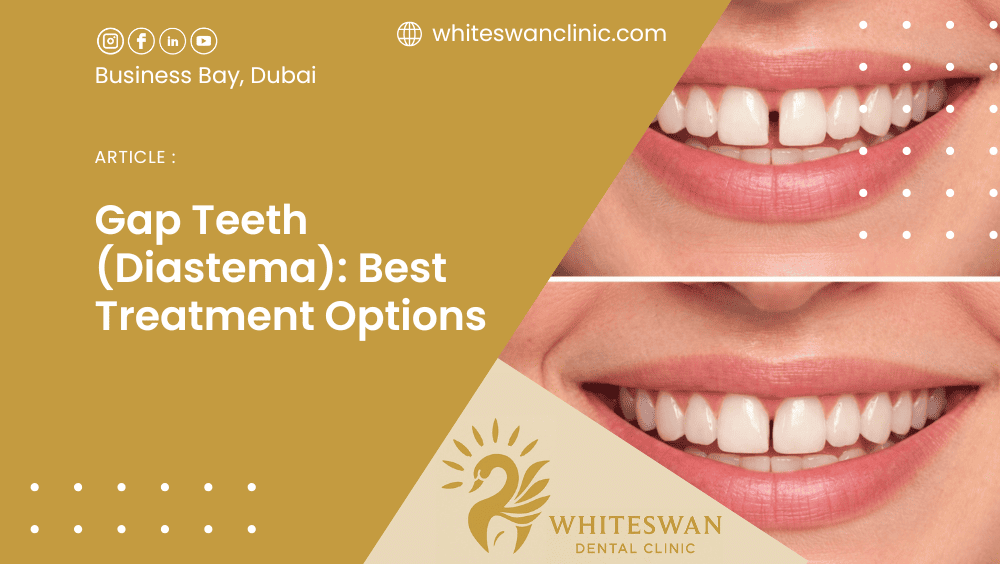
A small gap between your teeth could be a cute signature for some people but for some people, gap teeth feel unfinished and food will get stuck in that gap.
The tooth gap, especially in the front teeth, is clinically called diastema.
And thankfully, closing or reducing it is usually very doable with modern dentistry.
At White Swan Dental Clinic, we should not take a solution immediately after looking at the gap.we check the reason for the teeth gap, about your bite, whether your gums are healthy, and what kind of result solution you actually need.Because what is best for one person may not be best for another.
What Are Gap Teeth (Diastema)?
Diastema means a visible gap between two teeth. Most people think diastema means space between the upper front teeth, but gaps can appear top, bottom, front or back.
In many cases, a small gap is not a problem. but if it grows over time, affects speech, traps food often, or appears along with bleeding gums then it will need a proper treatment. Looking for a Dental Clinic in Business Bay?
Why Do Teeth Gaps Happen?
Before choosing braces, aligners, veneers, or bonding, it is best to know about the disadvatages of the.
here you can see the some common ones:
1) Tooth size vs jaw size mismatch
Sometimes your jaw has an extra space than your tooth size. so it will show as a gap between teeth even if your teeth are healthy.
2) Thick or low labial frenum (lip tie)
The small tissue band between your upper lip and gums can sometimes sit too low or be too thick. That can keep the two front teeth separated, even after orthodontic treatment, unless it’s addressed.
3) Missing teeth (or extra teeth)
When a tooth is missing, the adjacent teeth may shift away, leaving an open space.
On the other hand, an extra tooth may push the teeth out of alignment.
4) Gum disease and bone loss
The important thing is that the teeth affected with gum disease could weaken the support teeth.Then the teeth start to shift and gaps will appear slowly.
5) Habits like tongue thrusting or thumb sucking
when you swallow ,if the tongue pushes against the front teeth or if you have the habit of thumb sucking then the teeth could move slowly forward and apart.
6) Bite issues (malocclusion)
When the bite is not balanced, the front teeth may move wide or shift. Over time, that will become gap teeth. Get details on Dental Checkup in Business Bay.
Is Diastema Only Cosmetic?
Not always. A diastema could be cosmetic but at the same time it will be the sign for more dental issues.
You should consider an evaluation if:
- The gap is getting bigger
- You notice gum bleeding or swelling
- There’s frequent food trapping
- Your speech changed (like a lisp or whistle)
- Teeth feel loose or shifting
So yes, sometimes it’s cosmetic. But sometimes, it will be the sign for more dental issues. Looking for a General Dentistry in Business Bay?
Best Treatment Options for Gap Teeth (Diastema)
There’s no one best choice for everyone. The right choice based on gap size, tooth shape, bite, gum health, and how long you want results to last.
1) Clear Aligners for Diastema (Invisalign-style)
If you need a low-visibility option, clear aligners for gap teeth is the best choice. They use custom-made trays to move teeth gradually and gently.
Why many people like aligners:
- Almost invisible in photos
- Removable for eating and brushing
- Comfortable compared to many fixed options
- Great for mild to moderate gaps
What you must know: aligners only work well if you wear them as advised. Also, a retainer afterward is essential, or the space can return.
2) Braces for Gap Teeth
If the gap is wider or the bite needs correction, traditional braces are the best one for diastema treatment.
Braces may be better if:
- The gap is large
- There are multiple gaps
- Teeth are rotated or flared
- You have bite problems that need proper correction
Braces can also create the best foundation for later cosmetic finishing (like bonding) if you want a polished final look.
3) Composite Bonding (Quick Smile Fix)
For small to medium gaps, dental bonding for diastema can be one of the fastest solutions. Tooth-coloured composite material is carefully added and shaped to close the space and improve symmetry.
Pros:
- Can often be completed in one visit
- Usually minimal drilling (or none)
- Immediate visible improvement
- Natural look when done properly
Things to consider:
- Bonding can stain over time if you have the habit of coffee, tea or smoking
- It can chip if you bite hard things or have nail-biting habits
- Maintenance may be needed after a few years
4) Porcelain Veneers for Diastema
If you need a highest cosmetic upgrade then the porcelain veneers are the best option.they can close gaps and also improve tooth shape and colour.
Veneers are a great option when:
- You want a more dramatic smile enhancement
- Teeth are uneven, worn, or stained
- You want a long-lasting cosmetic result
- You prefer a more “smile makeover” approach
A careful design matters here. Veneers should look natural. The aim is to get a clear smile without changing your face shape.
5) Crowns (If Teeth Need Strength + Shape)
Crowns are not the first option for a gap between teeth but if the tooth is over filled, cracked, or weakened, a crown could restore strength and close the gap also.
6) Frenectomy (Lip Tie Treatment)
If the lip tie is the reason for gap teeth then a frenectomy might be suggested with aligners and braces.This reduces the chance of worsening later.
7) Gum Treatment First (If the Gap Is From Gum Disease)
If gum disease is the main reason then you have to cure that one before closing the gap.Once everything is healthy and stable then you can plan cosmetic ornorthodontic treatment. Get details on Root Canal Treatment in Business Bay.
How Long Does Diastema Treatment Take?
It based on the method and your case:
- Bonding: often one appointment
- Veneers: usually a few visits over 1–3 weeks
- Clear aligners: typically several months (sometimes longer)
- Braces: often 6–24 months
- Gum treatment first: varies depending on gum condition
Will the Gap Come Back?
It can. Relapse is common if the cause isn’t fixed—or if retainers aren’t used.
To keep results stable:
- Wear retainers exactly as instructed
- Treat gum issues early
- Address tongue thrust habits if needed
- Attend follow-up reviews to catch small shifts early
Are DIY Methods Safe for Closing a Tooth Gap?
No. Online “elastic band” tricks can seriously damage gums, loosen teeth, and harm your bite. Safe diastema treatment requires professional planning and controlled movement.
Related Articles:
» Gum Contouring: When Your Gums Affect Your Smile?
» How to Know If You Need a Dental Crown?
» When to Replace Old Fillings: Signs You Shouldn’t Ignore?
» Dental Abscess: Warning Signs That Need Immediate Care
» Dental Implants in Dubai: Step-by-Step Process
Why Choose White Swan Dental Clinic?
At White Swan Dental Clinic, we focus on best and long lasting results.before recommending treatment we evaluate your gap, your bite, gum health, and tooth shape. That way, your smile is better for the long-term.
FAQs on “Gap Teeth (Diastema): Best Treatment Options “
Diastema is a gap between two teeth especisally between the upper front teeth.
Jaw-tooth size mismatch, lip tie, missing teeth, gum disease, tongue thrust, and bite problems are the common causes for a gap between teeth.
No, Adults need bonding, veneers, aligners, or braces.
Composite bonding is a quick option and might be done in one visit.
Yes, clear aligners for work well for many mild to moderate cases of diastema.
Braces could be better for larger gaps or complex bite issues. Aligners are good for many simple to moderate gaps.
Bonding is durable, but not more time.With good care, it can last years.
Yes, especially if you also want improvements in tooth colour, shape, and symmetry.
Yes. Gum disease can reduce support, causing teeth to shift and create spaces.
Yes. Retainers help prevent relapse and secure the gap from reopening.
Not always. But if it’s a relapse risk, a frenectomy may be recommended.
Most of the treatments are comfortable but aligners or braces might cause mild pressure.