
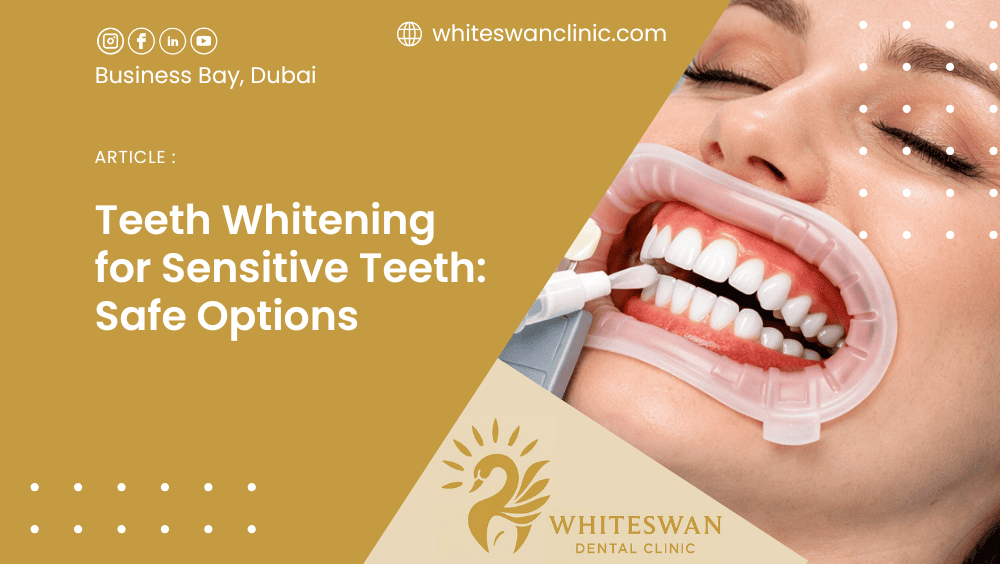
Are you the person who has sensitive teeth but you want a bright smile?
Many people at White Swan Dental Clinic ask the same question, “Can I whiten my teeth without that painful zing?” The answer is yes but if you do it the safe way.
If teeth whitening is planned properly, people with sensitive teeth can get a brighter smile. So which method you are choosing and the condition of your teeth are the main things in any treatment.
Here we can see about safe teeth whitening options for sensitive teeth and what to avoid, and how to maintain your teeth and when you can brighten your teeth.
Why Teeth Whitening Can Cause Sensitivity
Most whitening treatments remove stains through enamel using peroxide based ingredients. That’s how they whiten so effectively.
but that process could temporarily irritate the inner tooth layer, especially when small channels inside the tooth become more “active.” so you might feel short sharp sensitivity to:
- cold water
- hot drinks
- sweet foods
- even air hitting your teeth
The good news is that whitening sensitivity is temporary. Get details on Dental Clinic in Business Bay.
Common Reasons Your Teeth Are Sensitive (Even Before Whitening)
Before doing the whitening you have to know about the reason for your teeth sensitivity.
sensitivity can come from:
- thin enamel from acidic foods or drinks
- hard brushing or using a rough toothbrush
- gum recession exposing the root area
- teeth grinding (bruxism) that causes small cracks
- cavities or leaking fillings
- recent scaling or dental treatment
Therefore, if your sensitivity is strong or focused on one tooth, don’t jump into whitening at home. A dental check will help to secure from the delta issues and over spending.
Is Whitening Safe for Sensitive Teeth?
Yes, but it is based on the product and the way it used
A gentle whitening plan usually includes:
- lower peroxide strength
- shorter sessions
- breaks between whitening days
- sensitivity protection
So,you should think about treatment that will not harm your teeth. Looking for a Teeth Whitening near Business Bay?
Best Safe Whitening Options for Sensitive Teeth
1) Professional In-Clinic Whitening (With Gum Protection)
In-clinic whitening could be a best choice if you want a bright smile with professional control.
At the clinic, your dentist could protect your gums, check your reaction, and adjust the strength.
This option is helpful when:
- you have moderate sensitivity
- your gums irritate easily
- you want faster results without guessing
Also, a dentist may apply desensitising gel before or after whitening to maintain the things comfortable.
2) Custom Take-Home Whitening Trays (Often the Most Comfortable Option)
For sensitive teeth, this is often the favourite because it’s gentle and controlled. Since the trays are custom-made, the gel sits where it should on the teeth not on the gums.
A dentist-guided plan can include:
- low-strength whitening gel
- shorter wear time
- fewer days per week
- “rest days” if sensitivity flares
So you can brighten your teeth but you need to consider about your teeth condition.
3) Whitening Toothpaste for Sensitive Teeth (Slow, but Low Risk)
Whitening toothpaste is an easy choice to get a bright smile.it removes the stains which are coming from tea, coffee, and smoking.
It will not remove the stains like how the professional gel does.but it can give a clean brighter smile.
choose a toothpaste that has
- “for sensitive teeth”
- low abrasion
- contains fluoride and potassium nitrate
you have to avoid abrasive powders and aggressive charcoal products, because they could wear enamel and increase sensitivity.
4) Low-Strength Whitening Strips (Use With Care)
Whitening strips work for some people, but the gel might touch gums or sit unevenly, which can stimulate irritation.
If you choose strips:
- pick low-strength versions
- don’t use them daily
- reduce time if your teeth start to sting
- stop if sensitivity becomes sharp
If you have sensitive teeth then you should consult a dentist. Get details on Dental Checkup in Business Bay.
Whitening Methods Sensitive Teeth Should Avoid
If your teeth are sensitive, be careful with:
- “extra strength” whitening kits used too often
- unlabelled whitening products with unknown peroxide levels
- abrasive whitening powders
- DIY hacks like lemon with baking soda but chance to damage the enamel.
- whitening when you have gum inflammation
Shortly , some quick fixes make long-term problems.
How to Reduce Sensitivity Before, During, and After Whitening
Before Whitening (Start 7–14 Days Early)
- Brush twice daily with desensitising toothpaste
- Use a soft toothbrush with gentle pressure
- Cut down on acidic drinks such as cola, citrus, energy drinks
- Treat first if you have any cavities or gum issues
During Whitening
- Whiten every other day (or less), not daily
- Keep sessions short
- Don’t “double dose” because you want faster results
- Take breaks if sensitivity starts building
After Whitening
- Avoid very hot/cold foods for 48 hours
- Avoid staining foods or drinks for 48 hours such as coffee, red wine
- use fluoride toothpaste
- Ask your dentist about desensitising treatments
This routine makes a big difference. Also, it helps whitening results look bright and last long. Looking for a General Dentistry in Business Bay?
Important Note: Crowns, Veneers, and Fillings Don’t Whiten
Whitening gels only brighten natural tooth enamel. They will not change the colour of crowns, veneers, or tooth-coloured fillings. So, if you do dental work on front teeth, whitening could make the natural teeth lighter.
At White Swan Dental Clinic, we usually recommend:
- checking your existing restorations before whitening
- planning whitening first if you’re considering cosmetic work
- matching shades properly for a natural look
How White Should You Go If You’re Sensitive?
Getting brighter teeth too fast increases the sensitivity. If you want a natural bright shade means 2 to 6 lighter is enough and you need to maintain it properly.
When you keep your expectations realistic, you usually get:
- better comfort
- fewer sensitivity flare-ups
- more even results
When You Should See a Dentist Before Whitening
Please don’t whiten at home first if:
- you have strong sensitivity on one tooth
- you see dark spots, cracks, or holes
- your gums bleed easily
- you’ve had recent dental pain
- you grind your teeth heavily
In these cases, whitening might l be possible, but the plan should be customized.
Related Articles:
» How Long Does Teeth Whitening Last?
» Professional Teeth Whitening in Dubai
» Preventing White Spots During Braces: Demineralization Control
» Post-Whitening Care: What to Eat and Avoid for 48 Hours?
» Whitening Strips: Do They Work?
Whitening for Sensitive Teeth at White Swan Dental Clinic
At White Swan Dental Clinic, we focus on whitening that looks better and feels harmless.
Based on your teeth, we may suggest:
- a quick check-up before whitening
- customised whitening trays
- professional in-clinic whitening with gum protection
- sensitivity support (fluoride/desensitising gels)
- aftercare instructions to keep results longer
So, you can brighten your smile without affecting your teeth.
FAQs on “Teeth Whitening for Sensitive Teeth: Safe Options”
Yes, if you choose safe whitening methods you can whiten your sensitive teeth.
Custom take-home trays with low-strength gel is the safest method for many people.
No, sensitivity goes away after a while and gets better once you stop whitening.
You can use desensitising toothpaste and shorten your whitening period.
If they’re low-abrasion and designed for sensitive teeth then it is safe.But you will get the result slowely.
They can, especially stronger strips or long wear times.
Yes, but exposed roots might be more sensitive.
No, Before whitening you need to treat your cavity.Because if cavity is there means whitening will be painful.
No, you can whiten natural teeth only but if you have crowns or veneers shade matching might be needed.
It will take 6–24 months.
You should avoid very hot,cold and staining items such as coffee, tea, and dark sauces for 48 hours.
If you feel pain and sensitivity for more than a few days then you should stop the whitening and consult with the dentist.