
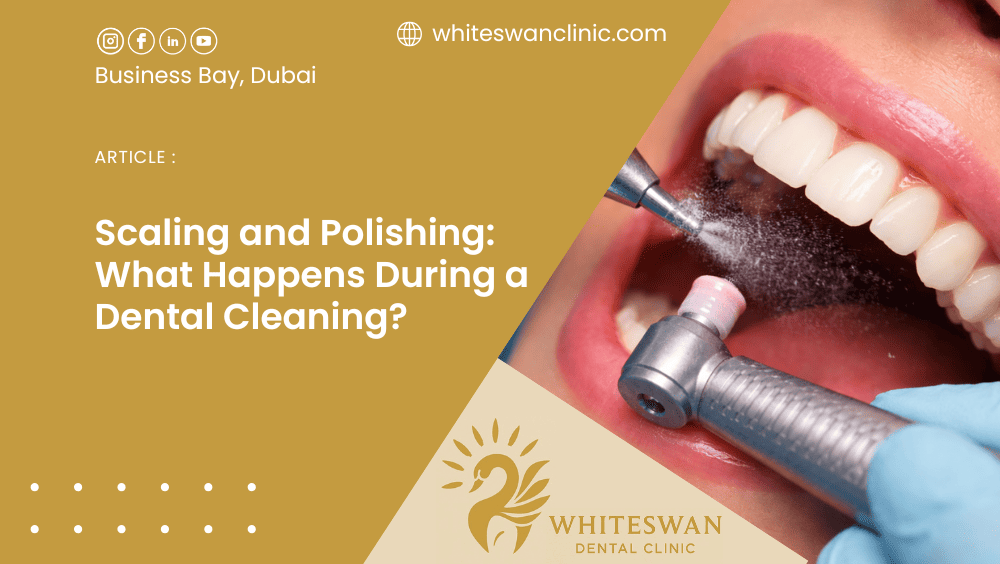
After booking a dental cleaning, if you have a doubt about what exactly is going on with that procedure, you are not alone.. A lot of people imagine sharp tools, discomfort, or some long complicated process. In reality, scaling and polishing is usually straightforward, fairly quick, and honestly one of the best things you can do for your mouth.
At White Swan Dental Clinic, we see patients who brush well but still have tartar in the same usual spots behind the lower front teeth, around the back molars, and near the gumline. In this situation professional cleaning is important.
So, from the details below you can know about what the procedure will do in the deep cleaning.
What Is Dental Cleaning, Really?
A professional teeth cleaning is help to remove two main problem:
- Plaque which is a soft, sticky film that develop everyday
- Tartar (calculus) which is a plaque that has hardened and stuck firmly to teeth
Plaque can be removed by brushing when you find it earlier.But, once plaque turns into tartar, it will not go by brushing.You need to do scaling. Looking for a Dental Clinic in Business Bay?
Scaling vs Polishing: What Do Those Words Mean?
“Scaling and polishing” are two different parts of the same appointment.
Scaling
Dental scaling is the “tartar removal” part. The dentist removes tartar from:
- the tooth surface
- the gumline area
- and sometimes slightly under the gums (depending on gum health)
Tartar holds bacteria in place and if bacteria sit long term, gums become swollen, bleed and can slowly pull away from teeth. So scaling is very important.
Polishing
Tooth polishing is the finishing step. It smooths the teeth and helps remove surface stains from:
- coffee and tea
- certain foods/spices
- light smoking stains
Polishing will not change the natural shade of your teeth. But, it makes teeth look cleaner and smoother. Get details on Dental Checkup in Business Bay.
What Happens During a Dental Cleaning Appointment? (Step-by-Step)
Let’s go through it like a real visit.
1) Quick Oral Check Before Cleaning
Before anything starts, your dentist checks your mouth. This is not a full “big exam,” but a basic look at:
- gums (redness, swelling, bleeding)
- visible tartar build-up
- any sensitive areas
- fillings and crowns (just to make sure nothing is loose or rough)
If you have gum issues, the dentist may check gum pocket depth too. That’s a simple measurement that tells us how healthy the gums are.
2) Identifying Plaque and Tartar Areas
Some tartar is obvious. Some is hiding. Typical tartar hotspots include:
- behind lower front teeth (very common)
- near the upper molars
- along the gumline
If you tell us you’re getting bleeding while brushing, we pay extra attention to those gumline zones.
3) Scaling: Removing Tartar and Build-Up
Now the main part begins: scaling.
There are two ways to do :
- Ultrasonic scaling: used a tool that vibrates gently and water to remove tartar
- Hand scaling instruments: used for fine detailing and tight corners
What you might feel:
- pressure, not pain
- water spray and suction
- a bit of vibration
- slight sensitivity in certain spots
If your gums are inflamed, then it is bleeding. That is not a bad thing while cleaning. It is happening that your gums were irritated already, and cleaning is removing the cause.
4) Cleaning Between Teeth
After scaling, the dentist cleans between teeth using floss or interdental tools. If you floss at home, professional cleaning reaches angles that are hard doing at home.
This step helps reduce:
- food trapping
- gum irritation
- bad breath
5) Polishing: The Smooth, Fresh Finish
Next comes polishing—the part most people actually enjoy.
A soft rotating brush (or rubber cup) with polishing paste is used to:
- smooth the enamel surface
- remove mild stains
- give that “fresh, clean” feel
After polishing, teeth feel almost slippery. That’s normal and expected.
6) Rinse + Final Check
You rinse, then your dentist checks again quickly. If anything stands out—like early decay, gum inflammation, or areas that may need further care—you’ll be told in a simple way (no scary lecture). Looking for a Teeth Whitening near Business Bay?
7) Personal Home Care Tips
This is usually the most useful part if you want to keep results longer. You may get advice like:
- switch to a soft brush if you brush too hard
- flossing method for your tooth shape
- whether you need a better toothpaste for sensitivity
- how often you should return for cleaning
Does Scaling and Polishing Hurt?
Scaling and polishing is not painful. But , it might feel uncomfortable if:
- tartar is heavy
- gums are inflamed
- teeth are sensitive
- you have exposed roots from gum recession
If you have fear, inform your dentist at the start. Some options will help to you such as :
- numbing gel
- gentler scaling settings
- short breaks
- local anaesthesia (only if really needed)
The goal is always comfort.
How Long Does a Dental Cleaning Take?
It will take 30 to 60 minutes.
However, it may take longer when:
- tartar build-up is severe
- gums bleed a lot
- you need deeper cleaning under the gumline
- you haven’t had cleaning in years
The dentist might recommend splitting it into two sessions for comfort. Get details on Broken Tooth Treatment in Business Bay.
Why Dental Cleaning Is Worth It (Even If You Brush Well)
A proper professional dental cleaning helps you in ways brushing can’t.
Benefits you’ll usually notice:
- cleaner breath (yes, quickly)
- less gum bleeding
- smoother teeth
- fewer food-stuck moments
- improved gum comfort
Benefits you don’t “feel” but matter:
- lower risk of cavities
- reduced chance of gum disease progression
- early detection of small issues
- healthier gums long-term
It’s preventive care. You’re basically paying for fewer problems later.
What Should You Do After Scaling and Polishing?
Most people go back to normal.But, these tips help:
- Drink water after your appointment
- If you feel sensitivity, avoid icy drinks for that day
- Brush gently
- Avoid heavy staining drinks such as coffee and drink
There’s no need to panic about the tenderness of your gums.They settle within two days. Looking for a Root Canal Treatment in Business Bay?
How Often Should You Get Scaling and Polishing?
For many patients, every 6 months is ideal.
However, you may need more frequent cleaning (every 3–4 months) if you:
- smoke or vape
- have diabetes
- have braces or aligners
- had gum disease earlier
- build tartar quickly (some people just do)
The “right schedule” depends on your gums, not just your age.
Related Articles:
» How Long Does Teeth Whitening Last?
» When to Replace Old Fillings: Signs You Shouldn’t Ignore?
» Dental Abscess: Warning Signs That Need Immediate Care
» Receding gums: Treatments that work
Protecting Your Smile, One Cleaning at a Time
A dental cleaning is the simplest way to protect your gums, keep your breath fresh, and avoid bigger dental problems later. Scaling and polishing removes what brushing can’t, and it is cleaning really well.
FAQs on “Scaling and Polishing (Dental Cleaning)”
Scaling is the removal of plaque and tartar from teeth and gumline.
Polishing smooths the teeth and helps remove mild surface stains.
No, if tartar form, you need professional tartar removal with dental tools.
Yes, professional cleaning is a safe and secure procedure for your enamel.
Gums are inflamed from plaque and tartar so bleeding is happening. After cleaning, gums often improve.
No. It can feel like that if tartar was “packing” spaces. Cleaning reveals the real tooth surface.
It removes stains and makes teeth look brighter, but it’s not the same as professional whitening.
Usually 1–2 days, and often it’s mild. If it lasts longer,tell your dentist.
Yes. If gums feel tender, choose softer foods for a few hours.
Usually 30–60 minutes, depending on tartar and gum condition.
Deep cleaning goes deeper under the gums and is done when gum pockets are present.
Most people benefit every 6 months, but some need every 3–4 months depending on gum health.