
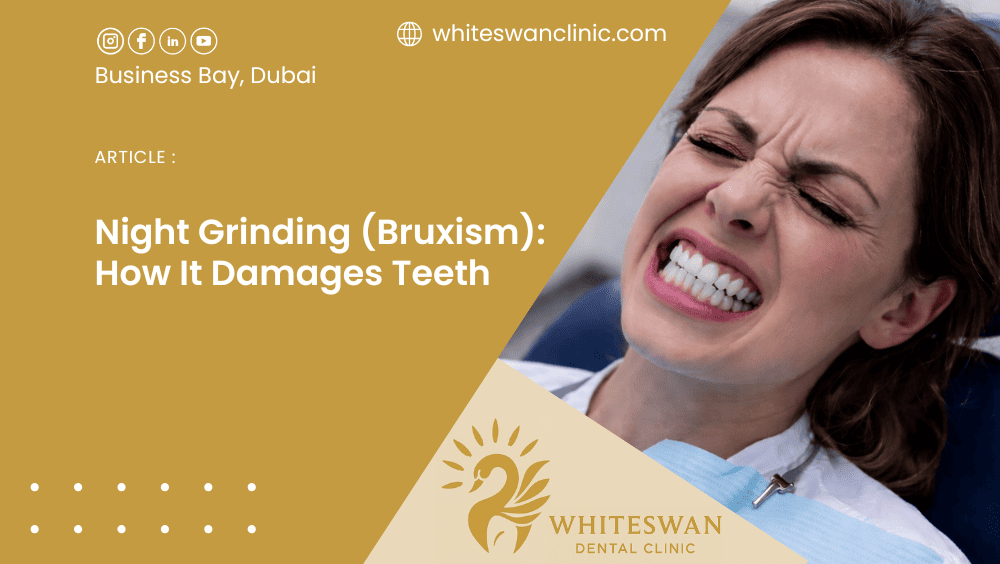
You might sleep for eight hours and wake up feeling like you have done a workout. Sore cheeks, tight jaw, and a dull headache behind your temples. When this looks familiar, night grinding or bruxism would be the reason. Many people in Dubai clench or grind their teeth at night without even knowing it. The problem is, your teeth don’t get a “break” while you sleep. Instead, they take repeated pressure for hours, and that’s when the real damage starts.
White Swan Dental Clinic meets patients who say, My filling is breaking again and again or I don’t have cavities but why do my teeth hurt? After checking the bite and the wear pattern, the answer is bruxism that is working in the background.
You can protect the enamel when you catch it early. Stop the jaw pain and save your dental work from getting worse.
What Is Bruxism?
Grinding or clenching the teeth is Bruxism. This happens on a day when you are focused or stressed. But night bruxism occurs in the sleep. Since you are not awake to control it. The force could be stronger than normal chewing.
Grinding is not always loud. A few people clench silently. But the constant pressure would be harmful. Looking for a Dental Clinic in Business Bay?
Common signs to notice:
- Tight cheeks or sore jaw as you wake up
- Headache pain near the temples
- Sensitive teeth to hot or cold. It feels sharper than usual
- Flat looking edges or teeth that seem worn down
- Chipped teeth or sudden tiny cracks
- Pain or clicking near the jaw joint
- Crowns or fillings that are cracking or loosening
- A partner who hears grinding sound at night
Reason for People to Grind Their Teeth at Night
It is not always one cause. There is a mix of triggers.
1) Stress and a Busy Mind
This is a big one. If you are under pressure with poor sleep, work deadlines, and anxiety. Also when your body holds tension. For many people, this tension goes straight into the jaw.
2) Bite Problems or Uneven Teeth Contact
When your teeth are not met evenly, the jaw would search for a comfortable position. This movement increases the grinding and clenching. Sometimes a high filling can trigger pressure.
3) Sleep Issues and Breathing Problems
People grind more if they have a disturbed sleep. Mouth breathing, snoring and sleep apnea is included. Not all bruxism patients have this issue. But when you wake up tired or snore louder, it’s worth mentioning.
4) Lifestyle Triggers
Heavy smoking, caffeine, alcohol and late night screen time affects the sleep quality. Then grinding episodes can become more frequent. Get details on Dental Checkup in Business Bay.
How Bruxism Damages Teeth (And Why It Adds Up Fast)
Bruxism isn’t “just a habit.” It’s pressure and friction applied to teeth repeatedly. Over time, teeth start to wear like a coin that’s been rubbed for years—only it can happen much faster.
1) Enamel Wear – First Line of Defence Gets Thin
The hard outer layer of the tooth is Enamel. Grinding would slowly scrape it down. That’s why teeth start looking flat at the top, especially molars. Front teeth can also lose their sharp edges, which changes your smile shape.
If enamel wears out, the teeth look yellow. It is not staining. A few times the inner tooth layer or dentin shows through.
2) Sensitivity That Doesn’t Stop
When enamel thins, the teeth become reactive. Hot coffee, cold water, and sweet foods causes sharp feeling. People try toothpaste for this sensitivity and wonder that it barely helps. It is because the grinding is happening every night.
3) Chips and Cracks That You Won’t Predict
Grinding creates small cracks over time. At first, you won’t feel them. Then one day you bite something soft and a corner breaks. That’s common with bruxism—damage doesn’t always match what you were eating.
Signs of cracking include:
- Pain when biting on one side
- A tooth that feels “off” even without a cavity
- Rough edges you keep feeling with your tongue
- A filling that keeps breaking again
If a crack reaches deep toward the nerve, treatment may become more complex, like root canal treatment and a crown.
4) It Can Break Fillings, Crowns, and Veneers
A lot of people think, “My teeth are fixed, so I’m safe.” Bruxism put stress on dental work. Crowns loosen, fillings fracture and veneers might chip. When you keep repairing the same tooth, bruxism is the real reason for it.
5) Gumline Notches and Gum Recession
Some patients develop small notches near the gumline, especially on premolars. These areas can become sensitive and trap plaque more easily. Over time, gum recession can also become more noticeable.
6) Jaw Joint Pain and Face Tension
Jaw muscles are overworked. That is the reason for soreness in the cheeks, clicking when opening the mouth and pain near the ears. Bruxism triggers tension headaches as jaw muscles can connect closely with neck and head muscles. Looking for a General Dentistry in Business Bay?
Early Signs You Must Take Seriously
Bruxism starts quietly. Also rarely stays quiet.
Pay attention when you have:
- Morning jaw tightness
- Frequent headaches on waking
- Teeth sensitivity without obvious cavities
- Flattened teeth or chips on the edges
- Tight face muscles or pain near the ears
- Repeated broken fillings or crowns
- Clenching habit when concentrating
Noticing it early will save you from bigger repairs.
Checking for Bruxism at White Swan Dental Clinic
White Swan Dental Clinic looks for patterns that point to clenching and grinding like:
- Flattened bite surfaces and enamel wear
- Chipped enamel or micro-cracks
- Change in bite balance
- Jaw muscle tenderness
- Strain in the TMJ area
- Damage in existing restorations
When your symptoms shows airway or sleep issues, we recommend evaluation as part of a complete plan. Get details on Root canal treatment in Business Bay.
Treatment: How to Protect Teeth and Calm the Jaw
The best bruxism plan usually does two things:
- protects your teeth right away
- reduces the triggers over time
1) Custom Night Guard (Most Common and Most Effective)
A custom night guard is made to fit your teeth precisely. This creates a protective layer between lower and upper teeth. Hence grinding force won’t destroy the crack fillings or enamel.
In comparison to store bought guards, the custom guards:
- fits better and feel comfortable
- less likely affects your bite
- last longer
- protects more
2) Bite Review and Minor Adjustments
When we find high spots on restorations, bite imbalance or missing teeth that affects your bite, we suggest correction. Small improvements will reduce the strain.
3) Care and Support for the Jaw Pain
When your jaw muscles are sore. This can help:
- warm compress at the jaw area
- avoid gum and hard foods
- gentle jaw exercises
- posture support
4) Stress and Sleep Improvements
It matters more than what people think. Try to:
- cut caffeine intake after mid-afternoon
- reduce screen time before you sleep
- relaxing routines like breathing exercises and light stretching
- avoid alcohol intake before bedtime
Small changes will reduce the grinding episodes. Looking to a Best Clinic for Tooth Removal?
What Happens When You Ignore Bruxism
Bruxism usually gets more expensive over time. First it’s sensitivity. Then it’s chips. Then it’s broken fillings. Later it can become cracked teeth, jaw joint pain, and bite problems. That’s why a night guard is often one of the smartest “preventive” steps—because it can stop the damage before it turns into major dental work.
Related Articles:
» Gum Contouring: When Your Gums Affect Your Smile?
» Implant vs Bridge: Which One Should You Choose?
» Teeth Shifting After Braces: How to Prevent Relapse?
» Retainers: Types and How Long You Must Wear?
» Loose Teeth: Causes Linked to Gum Problems
Don’t Let Bruxism Steal Your Smile
When you suspect bruxism or night grinding, don’t wait unless you break a tooth. Protect your teeth early to manage it easier. White Swan Dental Clinic assesses your bite, checks the wear pattern and suggests the right solution. So you sleep better and keep up your smile.
FAQs on “Night Grinding (Bruxism)”
Clenching teeth or grinding habit in the sleep without realising.
Yes. Cracks and wear builds up for months or years.
Clenching can strain jaw muscles. This tension triggers temple headaches.
Yes. Particularly when your enamel wears down and there are no cavities.
Yes. Grinding pressure can break restorations repeatedly.
It helps in the short term. But a custom night guard can fit better and protect safely.
This reduces strain and protects teeth. You may grind still the damage reduces.
Yes. It overloads the jaw joint. This leads to pain, clicking or stiffness.
Most often. Stress is the biggest trigger for grinding and clenching.
Yes. Grinding can flatten the teeth. It changes the way the smile looks.
Sometimes. When fatigue and snoring are present. Evaluation is required.
When you have morning headaches, jaw pain, worn teeth, sensitivity or repeated dental breakage. Book the visit soon.