
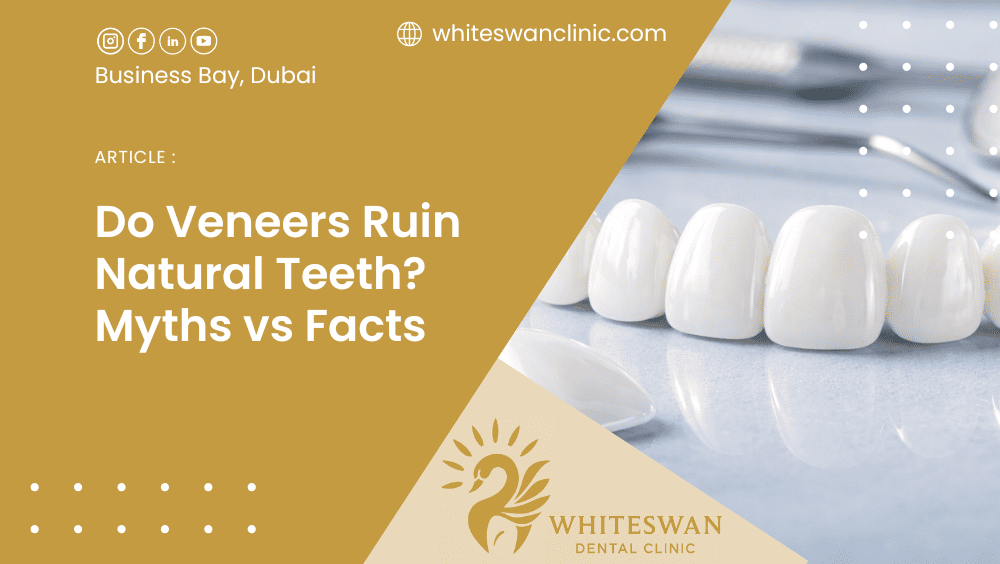
People talk about veneers like they’re a “smile upgrade”… and also like they’re a life sentence. One reel says veneers are harmless. Another says they ruin natural teeth and you’ll regret it forever. So what’s real?
At White Swan Dental Clinic, we meet the patients who love their veneers for years, and patients who come for repairs.
Veneers don’t ruin teeth. But bad veneers can create trouble. From this information below we can see the myths and facts.
First: what are veneers?
Dental veneers are thin covers bonded to the front surface of teeth. They’re used to improve:
- tooth colour
- minor chips and worn edges
- small gaps
- mild uneven shapes
- “one tooth looks different” situations
Common options include:
- Porcelain veneers which are strong, stain-resistant, very natural looking
- Composite veneers which are done in one visit in many cases, easier to repair, usually more budget friendly
Here’s the key point: veneers are not “stickers” you slap on with no planning. A good veneer case needs proper checks of gums, bite, enamel, and your long-term habits. Looking for a Dental Clinic in Business Bay?
The big question: do veneers ruin natural teeth?
Fact:Veneers will change natural teeth, but if it is done in the right way they will not “ruin”.
Some veneers need to have the enamel reshaped so that they fit perfectly and seem natural. That doesn’t mean damage right away. It shows organized, regulated preparation. When people go too aggressive with their preparation or when the case wasn’t right for veneers in the first place,problems often develop.
So the question should be like Are veneers the right solution for your teeth, and will they be done conservatively?
Myth 1: “Every veneer means your tooth gets shaved down to a tiny peg”
Fact: That “peg tooth” look is not normal dentistry.
Yes, you may have seen scary photos online. But in modern cosmetic dentistry, the goal is minimal, conservative preparation .
A skilled dentist extracts only what is required. In many cases, it’s a thin layer from the front surface. Also, some people can even be candidates for minimal-prep veneers.
If someone is offering the same heavy preparation for everyone, that’s a red flag.
Myth 2: “Teeth rot under veneers”
Fact: Teeth don’t randomly rot because they have veneers.
When bacteria stay on teeth and around the gumline decay will affect especially if there are gaps, rough edges, or poor brushing.
A proper fitting veneer will have a smooth edge and a tight seal. If you maintain the hygine the tooth underneath will stay healthy.
Problems can affect when:
- the veneer margin is poorly finished
- gum inflammation already exists and wasn’t treated
- flossing is skipped regularly
So no, veneers don’t “cause” cavities. But they also don’t make you immune to them.
Myth 3: “Veneers make teeth weak forever”
Fact: Bonded veneers can actually support the front of a tooth.
Once bonded properly, the veneer and tooth behave like a single unit. The strength comes from good enamel bonding and correct bite design.
What makes veneers fail faster is usually not “weak teeth.” It’s:
- biting hard objects
- nail biting
- teeth grinding
- bite issues that were never corrected
If you grind at night, your dentist may recommend a night guard. That doesn’t mean veneers are bad.It means your bite needs protection. Get details on Dental Crowns.
Myth 4: “Veneers always look fake”
Fact: Veneers look fake when they’re overdone.
The overly white, bulky “piano teeth” look usually comes from poor design choices, not from veneers as a concept.
Natural veneers need:
- the right shade
- correct thickness
- natural edge shape
- harmony with the gumline and face
A good dentist plans your smile so it suits you, not a generic Instagram template.
Myth 5: “No-prep veneers are the safest option for everyone”
Fact: No-prep veneers are great for some cases and wrong for others.
No-prep sounds like a dream because it suggests “no drilling.” Adding anything to front teeth can make them look big or cause biting difficulties.
Sometimes, a little bit of shaping can make the end result feel more natural.
Clear communication with your dentist will decide if no-prep, minimal-prep, or standard prep
Myth 6: “Veneers fix crooked teeth”
Fact: Veneers can mask mild crookedness, not correct major alignment.
Veneers might crush, chip, or wear unevenly on crowded teeth or deep bites.
The bestr plan is:
- align teeth with braces or clear aligners
- then add veneers only if needed for shape or colour perfection
This approach often reduces how much enamel must be adjusted. And honestly, it keeps things healthier long term.
Myth 7: “Once veneers are on, you never need to think about them again”
Fact: Veneers are durable, but they still need care
Veneers can last many years, but they’re not “fit and forget.” Your gums change with age, habits can wear edges, and biting habits matter.
To keep veneers and natural teeth healthy:
- brush gently twice a day
- floss daily especially around the edges
- get professional cleanings
- don’t use teeth for opening packets is a no
- wear a night guard if you grind
That’s it. Simple, but it works. Looking for a General Dentistry in Business Bay?
What actually can go wrong with veneers?
Here are the real issues we watch for, and how they’re prevented:
1) Over-preparation
Too much tooth reduction can increase sensitivity and reduce long-term stability. Conservative prep and good planning reduce this risk.
2) Poor bonding
The veneer will peel or change color if the bond is poor. Properly selecting, sorting, and using materials is vital.
3) Bad margins
If the veneer edge doesn’t blend smoothly, plaque builds up and gums get irritated. It’s important to finish and polish well.
4) Ignoring grinding
If you grind and don’t protect the veneers, chipping risk goes up. Night guards are a smart solution, not an “extra sales item.”
5) Wrong case selection
If your gum health, bite, or alignment needs treatment first, veneers should not be rushed. Fix the foundation first.
Related Articles:
» Veneers vs Bonding: Which Smile Makeover Suits You?
» Achieving Perfect Smiles: Orthodontic Treatments in Dubai
» Dental Implants in Dubai: Restoring Your Smile with Precision
» How to Remove Dental Stains Safely?
» When Should I Have Root Canal Retreatment?
Veneers done right vs veneers done fast (simple checklist)
|
What matters |
Veneers done right |
Veneers done fast |
|
Planning |
bite + gum check + smile design |
“pick shade and start” |
|
Tooth prep |
conservative, enamel-friendly |
aggressive, one-style prep |
|
Fit |
smooth sealed edges |
rough edges / open margins |
|
Long-term |
night guard if needed |
grinding ignored |
|
Result |
natural, balanced smile |
bulky, too white, chip risk |
The honest takeaway
If you’ve been worried that veneers will “ruin” your teeth, you’re not silly. The internet has plenty of horror stories. But most of those stories share a pattern: poor planning, cheap shortcuts, or a dentist who didn’t treat the bite and gums properly.
When veneers are:
- carefully planned
- conservatively prepared
- correctly bonded
- maintained with good hygiene
they can be a safe, confidence-boosting option.
FAQs on “Do Veneers Ruin Natural Teeth?”
They often involve some enamel change, so you usually need veneers (or another restoration) long term, but that doesn’t equal “ruined teeth.”
No. Bacteria, bad hygiene, or bad margins cause decay.
Porcelain is more long lasting and stain-resistant but the composite veneers are repaired easily.The best choice based on your teeth.
Mild pain only feels and it is manageable. If needed, numbing is applied during preparation.
Sometimes it will cause sensitivity but it is not permanent.
If the bonding was not strong or if you bite hard foods or grind, it can happen sometime.
Sometimes, a bit of enamel is shaped. In some circumstances, veneers that don’t require much preparation may be possible.
Safe for the right cases. For others, they can look bulky or affect the bite.
Yes, small gaps can often be closed nicely with veneers.
They can improve the look of mild misalignment. If the problems are greater, aligners or braces can be the best initial approach.
You should not bite hard things and wear a night guard if you grind.
Inquire about conservative prep, bite testing, gum health tests, smile mock-ups, and tooth grinding.