
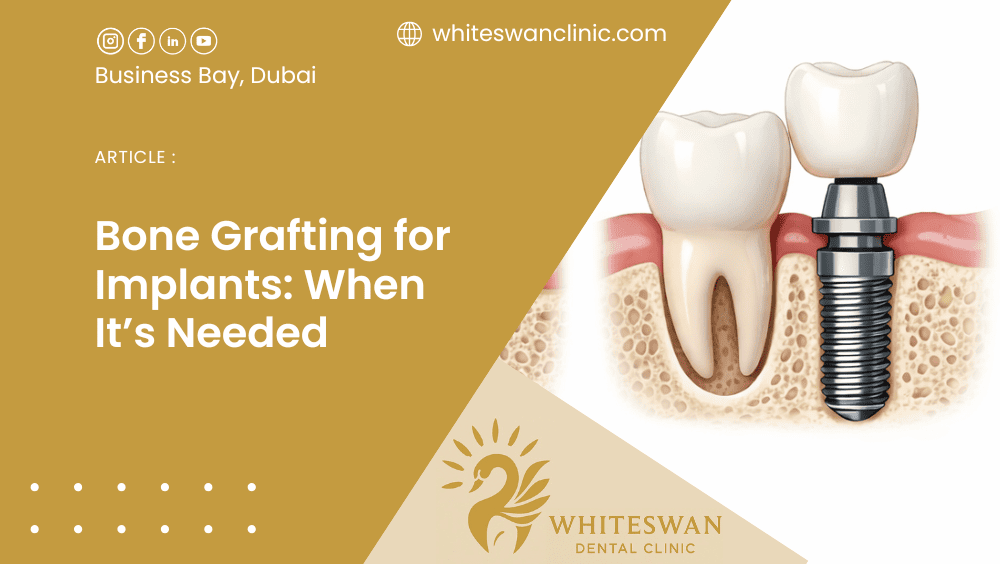
Losing a tooth not only leaves a gap in a smile. But they also affect the jawbone underneath. The bone shrinks after a tooth loss, trauma, gum disease or long term denture use. Thereby patients do not have healthy bones to hold the dental implant. That is when bone grafting for implants becomes important. A bone graft can rebuild the jaw. It creates a strong foundation for future implant placement.
In White Swan Dental Clinic patients ask questions like, Do I need a bone grafting before implants? The honest answer would be that not everyone needs it. But when the jawbone is soft, thin or low in volume, grafting is the best step for a long term implant success. Mayo Clinic says that implants require enough bone support as chewing places a strong pressure on the jaw. The treatment fails when the bone does not support the implant properly.
Bone grafting for dental implants
Bone grafting for dental implants is the procedure. It rebuilds or adds bone in the jaw where the support is missing. This creates a stable base for the implant screw. As per Cleveland Clinic, a dental bone graft can replace bone that has been missing in the jaw or lost. This is mainly performed before implant treatment.
The graft would act like a support builder. The oral surgeon or dentist places grafting materials in the weak area. Over time the body heals. Then the site becomes stronger and suitable for an implant. Looking for a Dental Clinic in Business Bay?
Why bone loss happens before implants
Jawbone loss can happen faster than most people realise. When a tooth is missing, the bone in that area will not receive regular stimulation from chewing. So the body begins to resorb the unused bone. Also infection, injury, gum disease or tooth extraction complications reduces the bone volume. The NHS patient guidance on implant grafting clearly states that bone grafting is needed when there is not enough bone in the jaw that supports implant placement.
Main reasons for bone loss include:
- Tooth loss for a long time
- Advanced gum disease
- Trauma to the jaw or face
- Bone infection
- Long-term denture wear
- Natural thin jawbone in some areas
Although your gums look healthy from outside. The underneath bone still requires rebuilding.
Why bone grafting is needed for implants
Dentists mostly recommend bone grafting before dental implants. When scans show that the jaw does not have enough width, height or density. Mayo Clinic mentions that the jawbone graft is needed when the bone is soft or not thick enough. Likewise, hospital guidance from Guy’s and St Thomas’ says grafting is often used to rebuild the area before the implant is placed.
You may need a graft if:
1. The jawbone is thin
When the bone is narrow, the implant will not fit safely.
2. The jawbone is too soft
Even if there is enough space, weak bone may not hold the implant firmly.
3. Bone height has reduced after tooth loss
This is very common in patients who waited many months or years before replacing a missing tooth.
4. There was infection or periodontal disease
Serious infection can damage the bone around the missing tooth.
5. A sinus lift or advanced support is required
In the upper back jaw, bone can be limited because of the maxillary sinus area. Some patients need extra grafting there before treatment. NHS guidance notes that different grafting options are used depending on where and how much bone is missing. Get details on Dental Checkup in Business Bay.
Types of bone grafts used for implant dentistry
All grafts are not the same. The type selected depends on the treatment area, amount of bone loss and the patient’s overall oral health.
Autogenous bone graft
It uses the bone from your own body. Mainly from another area of the jaw. AAOMS mentions that autogenous grafts have living bone tissue and growth factors. This is one reason they are valued in reconstruction. NHS guidance also mentions that a small amount of bone is taken from the back of the jaw or chin in minor cases. Whereas larger grafts require bone from another site like the hip.
Donor bone graft
This uses processed donor tissue from a tissue bank. AAOMS mentions that non-autogenous grafts come from a donor. Not from the patient.
Synthetic bone graft
A few grafting materials are man-made. They are designed to support bone regeneration.
Animal-derived graft material
Certain grafts are made from processed natural sources and used safely in dental procedures.
The implant dentist chooses the suitable material based on your case. Hence there is no best option for everyone. Looking to a Best Clinic for Tooth Removal?
Will bone grafting and implant placement happen together
Yes sometimes. It is not sometimes. When the bone deficiency is small, the implant and graft are placed at the same appointment. But when the area requires a major rebuilding, the graft heals first and the implant is placed later. Cleveland Clinic states that healing may take months, and some implant services note that if there is not enough bone, the graft may need around three months of healing before implant placement. Guy’s and St Thomas mention that bone grafts are left to heal for 3 to 6 months. Before the implants are fitted. Due to this, the treatment timeline changes from patient to patient.
What to expect during the procedure
The procedure begins with treatment planning and detailed imaging. The area is numbed and then the grafting material is placed in the deficient part of the jaw. In some cases, membranes or other supportive materials are used to protect the site while it heals. AAOMS materials mention that bone grafting is a part of rebuilding normal bone architecture in the implant related procedures.
Bruising, mild swelling or soreness is normal after the procedure. NHS patient information on bone grafting mentions that bruising, swelling and pain occur after surgery. Get details on Broken Tooth Treatment in Business Bay.
Recovery after bone grafting for implants
Healing differs for each patient. Initial recovery may feel manageable within several days, but complete healing of the graft takes much longer. Cleveland Clinic mentions that initial healing takes a week. Whereas full graft healing takes longer depending on the case.
During the recovery phase, patients are advised to:
- follow the prescribed medicines carefully
- avoid pressure on the surgical site
- eat softer foods for a while
- keep the mouth clean as instructed
- attend review visits on time
Recovery needs patience. So the healing period can help create a stable base for the implant.
Is bone grafting painful
It is one of the common concerns. The procedure is done with local anaesthesia. You must not feel pain during treatment. Afterwards, swelling, tenderness and mild discomfort are to be expected for some days. Patients state that recovery feels easier. Particularly when they follow the aftercare advice. Looking for a General Dentistry in Business Bay?
Benefits of bone grafting before implants
Selecting bone grafting for implants offer many important benefits:
Better implant support
A stronger jaw will give the implant a reliable foundation. Mayo Clinic notes that grafting creates a solid base for the implant.
Improved long term stability
Implant may depend on the bone support for durability and function.
Better smile appearance
Rebuilding lost bone improves the contour of smile and gum.
More treatment options
A few patients may not be the candidates for implants without grafting. But after grafting, the implant placement becomes possible. Get details on Teeth Cleaning and Polishing.
Will every implant patient need a bone graft
No. Patients receive implants without grafting as well. When the jawbone is strong and healthy, the implant is placed directly. Cleveland Clinic’s implant guidance says that when there is enough bone, the implant can be done right away.
One way to know for sure is the X-ray, dental examination or 3D scans.
Why early treatment matters
When the missing tooth is left untreated for long, the bone will shrink. Replacing the missing teeth soon can reduce the need for bigger grafting procedures later. This is the reason why dentists encourage patients not to delay the implant consultations.
Related Articles:
» How Long Does Teeth Whitening Last?
» Implant vs Bridge: Which One Should You Choose?
» Teeth Shifting After Braces: How to Prevent Relapse?
» Teeth Whitening for Sensitive Teeth: Safe Options
» Scaling and Polishing: What Happens During a Dental Cleaning?
Ensuring Strong Implant Support with Bone Grafting
There is nothing to fear from bone grafting for implants. Consider it as a crucial step that prepares your mouth for implant success. If the jawbone is weak or thin, grafting can rebuild the support of your implant needs. This may extend the treatment time. But it often improves function, stability and final results. Authoritative patient guidance from Cleveland Clinic, Mayo Clinic, AAOMS and NHS sources support the same idea that strong bone is needed for predictable implant treatment. Also grafting is used when the support is missing.
When you miss one or more teeth and require bone grafting before dental implants, a personalised consultation is the best step. White Swan Dental Clinic will carefully plan as the right foundation leads to a better smile.
FAQs on “Bone Grafting for Implants”
This is a procedure that adds or rebuilds bone in the jaw. So the dental implant gets enough support.
You may need it. When your jawbone is soft, thin or shrunk after gum disease or tooth loss.
No. Some patients have enough healthy bone and it proceeds without grafting.
Early healing can happen within days. But grafts require several months before the implant placement. Some NHS guidance says around 3 to 6 months in most cases.
The procedure is done using local anaesthesia. You must not feel the pain during treatment. It is normal to have mild soreness afterwards.
Sometimes yes. Particularly in minor cases. But healing comes first in larger grafting cases.
The graft comes from donor bone, own bone, synthetic material or animal derived material.
This is mainly used in dental procedures. Particularly before the implant placement. Similar to surgeries, it has risks. So proper assessment is required.
When the jawbone does not support the implant, it will not be stable for long term.
They will assess your mouth with dental imaging, exam and 3D scans that measure the bone width, height and density.
Yes. Bone loss happens after a tooth is lost or removed. Because the area will not get the same stimulation from chewing.
Yes. Rebuilding bone creates better support for appearance and function in most cases.