
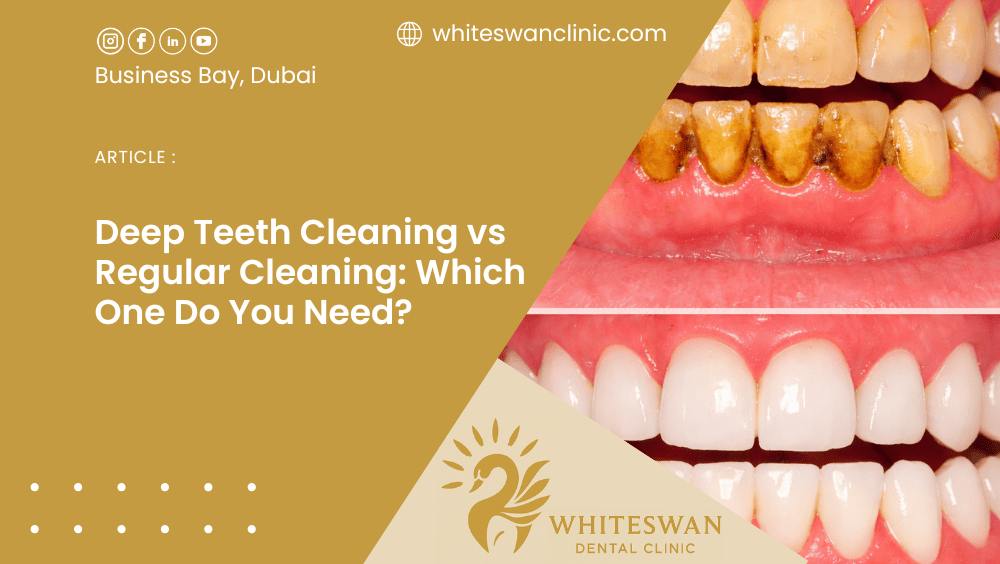
When you book a “teeth cleaning”, if your dentist says about the deep cleaning means you are not alone.. Deep cleaning is a different type of treatment, meant for a different problem. it is not another version of a normal clean as many people think.
At White Swan Dental Clinic, we explain it in an easy way:
Regular cleaning helps you stay healthy. At the same time, deep teeth cleaning helps you get healthy again when gum disease has started.
From this information below you will understand which one you might need and the reason for that.
What Is Regular Cleaning (Routine Dental Cleaning)?
A regular teeth cleaning is the standard cleaning. Most people get it every 6 months. It focuses on removing:
- Plaque which means a soft film of bacteria
- Tartar or calculus which means hardened plaque
- stains from coffee, tea, and food
This cleaning covers above and below the gums. It will keep your mouth fresh, stop cavities. Looking for a Dental Clinic in Business Bay?
Regular cleaning is best for you if:
- Your gums are generally healthy
- Your gum pockets are usually 1–3 mm
- You don’t have ongoing bleeding while brushing
- There is no sign for bone loss
What Is Deep Teeth Cleaning (Scaling and Root Planing)?
If bacteria develop up under the gumline, the dentist will recommend a deep cleaning.
Scaling and root planing:
- Scaling removes bacteria and tartar under the gums.
- Root planing smooths the tooth roots. So gums may recover and reattach quickly
Deep cleaning gets to places that a regular cleaning is unable to reach. Get details on Teeth Cleaning and Polishing.
Deep teeth cleaning is usually needed if:
- Your gum pockets are 4 mm or bigger.
- Your gums bleed often
- You have persistent bad breath that returns quickly
- Your gums are receding or swollen
- There’s early bone loss seen on X-rays
- Your dentist diagnoses gum disease
The Real Difference: Prevention vs Treatment
Here is the easiest way to remember it:
- Regular cleaning stops problems and maintains healthy gums
- Deep cleaning treats infection and deeper buildup below the gums
Both are doing cleaning but the purpose is different.Deep cleaning part of managing gum disease.
Signs You May Need Deep Cleaning
People are unaware that they have gum disease until it becomes more serious. because it can be quiet at first. Your mouth still gives you hints, though.
1) Your gums bleed easily
If your gums bleed while brushing, it is an inflammation or infection.
2) You have bad breath that won’t go away
If you smell after brushing the teeth then bacteria might be trapped under the gums.
3) Your gums look puffy, red, or sore
Healthy gums should look firm and pink but swollen gums mean irritation.
4) Your teeth look longer than before
That “long teeth” look can be gum recession, which is common in gum disease.
5) Your bite feels different
If teeth feel like they’ve shifted slightly, the supporting tissues may be weakening. Looking for a General Dentistry in Business Bay?
6) Your dentist measures deep pockets
This is one of the biggest signs. Pocket depth usually guides the decision:
- 1–3 mm = normal
- 4 mm = warning signs
- 5–6 mm+ = more serious gum disease risk
What Actually Happens During Each Appointment?
Regular Cleaning: What it usually includes
- Quick gum check and dental exam
- Remove the plaque and tartar
- Polishing
- Flossing
- Fluoride
- Advice on brushing
It will take 30–60 minutes, and it rarely feels uncomfortable.
Deep Cleaning: What it usually includes
- Detailed gum pocket measurement
- X-rays (if needed) to check bone levels
- Scaling under the gumline
- Root planing (smoothing the root surfaces)
- Local anaesthesia if you’re sensitive (common and helpful)
- Follow-up review to check healing
Deep cleaning may be done in parts (for example, one side today and the other side next visit), especially if several areas need treatment. Get details on Dental Checkup in Business Bay.
Is Deep Cleaning Painful?
If gums are inflamed, deep cleaning may feel uncomfortable but that is why numbing is used. After treatment, you could notice:
- mild tenderness
- slight bleeding when brushing
- sensitivity to cold for a short time
The good part is: many patients feel relief quickly because the infection starts settling down.
Why Deep Cleaning Usually Costs More
A routine clean is simpler and quicker. Meanwhile, deep teeth cleaning often:
- takes longer
- requires deeper treatment below the gums
- may involve anaesthesia
- sometimes needs follow-up care and monitoring
But , addressing gum disease early can prevent costly issues including tooth loss, gum surgery, implants, and extensive dental repair. Looking for a Root Canal Treatment in Dubai?
What Happens If You Only Do Regular Cleaning When You Need Deep Cleaning?
This is where people feel confusion.
If you have pockets and bacteria under the gums, a routine clean may make the teeth look cleaner but the infection can keep growing underneath.
That can lead to:
- continued gum bleeding
- worsening bad breath
- more gum recession
- gradual bone loss
- loose teeth over time
So, if deep cleaning is suggested it is because your gums need treatment.
Aftercare Tips (Simple, but powerful)
Whether you do regular or deep cleaning, results improve when you:
- brush twice daily with a soft brush
- floss daily or use interdental brushes
- use a dentist-recommended mouth rinse
- cut down frequent sugary snacking
- avoid smoking
- keep follow-up visits on time
After deep cleaning, many people benefit from cleaning every 3–4 months for a period, because gum disease can return if maintenance is ignored.
Related Articles:
» How to Care for Implants: A Cleaning Routine That Actually Works
» Dental Cleanings: What Happens and Why It’s Not a Big Deal
» What to Expect at a Dental Exam?
» Teeth Whitening for Sensitive Teeth: Safe Options?
» Teeth Shifting After Braces: How to Prevent Relapse?
So… Which One Do You Need?
Most of the time:
Regular cleaning is right if your gums are healthy and pockets are shallow.
Deep teeth cleaning is right if gum disease signs are present (deep pockets, bleeding, infection, bone changes).
At White Swan Dental Clinic, the decision is never random. We check the gums clearly, measure pockets, and review X-rays when needed. And we help you toward the right option.
FAQs on “Deep Teeth Cleaning vs Regular Cleaning”
No. Regular cleaning is preventive. Deep cleaning is a treatment for gum infection under the gumline.
If you have frequent bleeding, bad breath, gum recession, or pockets 4 mm+, you might need the deep cleaning.
No, Mild gingivitis might improve with regular cleaning and better home care.
It is based on how many areas are treated. Some people need one long visit, some people need multiple visits.
Not always, but local anaesthesia is common—especially if gums are inflamed or you’re sensitive.
Yes. You can eat. But if gums feel tender then it is better to avoid hot, spicy, or crunchy foods for a few hours.
It can be, but gum disease needs maintenance. Many patients need follow-ups and more frequent cleanings for a while.
Often yes—if the smell is caused by bacteria under the gums. Results improve with good home care too.
Deep cleaning doesn’t loosen teeth. Gum disease causes looseness. After tartar removal, teeth may feel “different” as swelling reduces.
Most people do it every 6 months, but your dentist may recommend more or less depending on your gums.
No. It’s a non-surgical periodontal treatment.
Gum disease may worsen bone loss and teeth loss.