
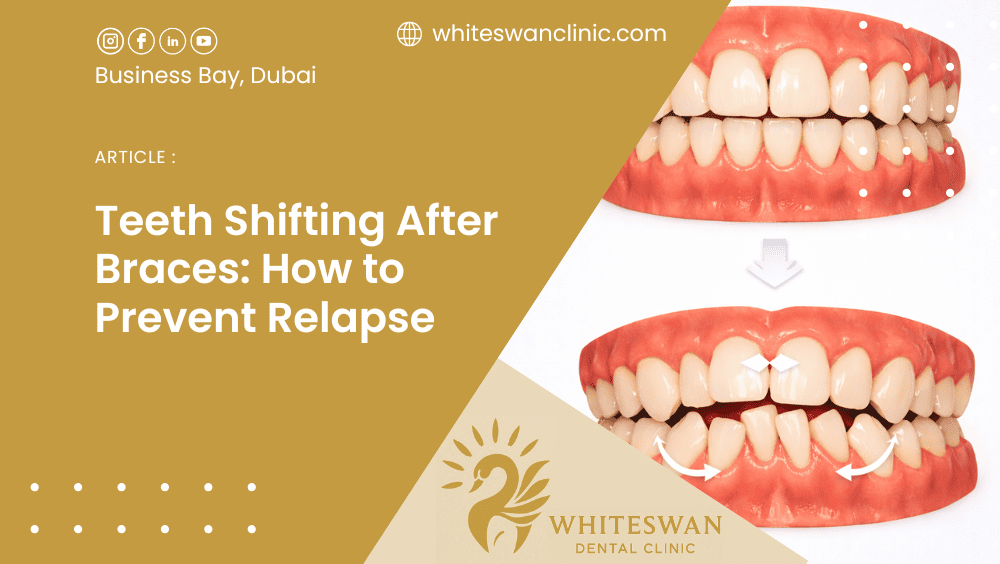
Finishing braces is like the end of your dental treatment journey. Your smile looks straight, photos come out better, and chewing may even feel easier. However, many people in Dubai get a surprise later: teeth shifting after braces. It can start slowly—one lower front tooth looks “slightly off,” or your bite feels different. Then you wonder, “Is my orthodontic work failing?”
The truth is simple: relapse after braces is common if retention is not followed properly. Teeth have “memory,” gums and bone need time to stabilize, and daily habits can push teeth out of position again. The good news? With the right routine and the right retainer plan, you can protect your results for the long term.
This guide explains why shifting happens and exactly how to prevent teeth from moving after braces in a practical, human way.
What Is Teeth Relapse After Braces?
When teeth gradually shift back to their previous locations following braces or aligners, this is called a relapse. It might be minor (small rotation) or more visible (gaps returning, crowding, bite changes). In many cases, relapse happens within the first year after treatment—because that’s when teeth and tissues are still “settling.”
If you recently finished treatment, don’t panic. A tiny change doesn’t always mean you need braces again. It is a sign to take retention seriously. Get details on Dental Clinic in Business Bay.
Why Do Teeth Shift After Braces?
1) Your teeth and bone need time to stabilize
The bone changes shape around the teeth as braces move them. The supporting tissues are still changing even after the braces are removed.That’s why retainers after braces matter so much—especially in the first 6–12 months.
2) Ligaments have “memory”
The periodontal ligaments can pull teeth back to old positions. So if your smile looks perfect intially, your mouth is still adjusting.
3) Wisdom teeth and late crowding
Wisdom teeth are not the only reason for teeth being crowded, but sometimes they can cause pressure in some people’s mouths.Also, many adults get “late lower crowding” naturally over time. That’s why long-term retention is normal, not unusual.
4) Skipping or inconsistent retainer wear
This is the biggest reason for teeth moving after braces. Wearing a retainer “sometimes” is like tying your shoes “sometimes” is won’t hold.
5) Teeth grinding (bruxism)
Teeth grinding can push teeth, chip edges, and change bite pressure. If you feel jaw pain, headaches, or flattened teeth,consult with your dentist.
6) Gum disease or bone loss
Gum problem might make your teeth less strong. Your dental treatment result is at danger if your gums bleed a lot or your teeth feel a little loose. Stable teeth have healthy gums. Looking for a Best Clinic for Tooth Removal?
Early Signs Your Teeth Are Shifting
Watch for these common signs:
- Your retainer feels tight or no longer fits the same
- A tooth looks slightly rotated (often lower front teeth)
- Gaps appear again
- Your bite feels “off,” especially when chewing
- Food traps between teeth where it didn’t before
- You notice mild crowding returning
It is easier to deal quickly if you notice them early.Sometimes with small changes to the retainer or aligner. Get details on Broken Tooth Treatment in Business Bay.
How to Prevent Relapse After Braces (Step-by-Step)
1) Wear your retainer exactly as instructed
This sounds obvious, but it’s the #1 solution. Most orthodontic plans follow a routine like:
- Full-time wear for a period (often months), then
- Night-time wear long-term
Your orthodontist will set the schedule based on your bite, age, and movement risk. In many cases, long-term night wear is the best protection against teeth shifting after braces.
Tip: If your retainer feels tight after missing nights, don’t force it aggressively. Wear it gently and book a review.
2) Choose the right retainer type for your lifestyle
There are two types:
Clear plastic retainer (Essix-style):
- Looks invisible
- Easy to wear
- Can crack or warp with heat
- Needs careful cleaning
Fixed/bonded retainer (wire behind teeth):
- Works 24/7 without effort
- Great for lower front teeth
- Needs flossing tools and good hygiene
- Can detach if not checked
Many patients do best with a combo: a bonded retainer plus a removable night retainer for extra security.
3) Don’t “wait and see” if your retainer doesn’t fit
If your retainer stops fitting properly, it’s a warning sign. Teeth may already be shifting. If you notice it early , it is easier to fix it.
In some cases, we can:
- Adjust or replace the retainer
- Scan for a new clear retainer
- Plan minor aligner correction if needed
4) Protect your smile if you grind your teeth
If you grind your teeth, it becomes stressed. A night guard or a protective retainer design may help. Also, stress management and bite checks matter more than people think.
5) Keep your gums healthy (this is a big one)
Stable teeth sit in healthy bone and gums. So if you want stable orthodontic results:
- Brush twice daily
- Use interdental brushes
- Get professional cleaning regularly
- Treat gum bleeding early
Even “small” gum inflammation can increase movement risk over time.
6) Avoid bad habits that push teeth
Some habits slowly move teeth:
- Nail biting
- Chewing pen caps
- Using teeth to open packets
- Tongue thrusting
- Mouth breathing
Reducing these habits helps maintain your post-braces teeth alignment stable.
7) Keep follow-up visits (yes, even after braces)
Many people stop appointments once braces come off. However, retention checks are where we catch problems early:
- Retainer fit check
- Bonded retainer integrity
- Bite stability review
- Gum and hygiene assessment
A 10-minute check can save you months of correction later. Looking for a General Dentistry in Business Bay?
Retainer Care Tips (So It Actually Works)
Here’s a quick table you can follow:
|
Retainer Care Step |
What to Do |
What to Avoid |
|
Daily cleaning |
Rinse + gentle brushing |
Hot water (warps plastic) |
|
Deep cleaning |
Retainer cleaning tablets weekly |
Toothpaste scrubbing hard (can scratch) |
|
Storage |
Keep in a vented case |
Wrapping in tissue (gets thrown away) |
|
Eating |
Remove before meals |
Chewing with retainer (breaks it) |
|
Heat exposure |
Keep away from sun/car dashboard |
Any high heat source |
If your retainer smells, looks cloudy, or feels rough, get it checked. A dirty retainer can irritate gums and also reduce wear compliance (because it feels “gross”).
If Teeth Have Already Shifted—What Can You Do?
This is not your mistake.It happens to many people with good intentions.
Depending on the shift, options include:
- New retainer to hold current position
- Short-term clear aligners for small corrections
- Braces re-treatment for more significant relapse
- Fixed retainer repair or replacement if it detached
Minor shifts are easier, faster, and cheaper to fix.
Related Articles:
» How to Know If You Need a Dental Crown?
» Dental Checkup in Dubai: What’s Included and How Often You Need It?
» How Long Does Invisalign Take?
» Wisdom Tooth Removal: What to Expect?
» Whitening for Sensitive Teeth Safely
Prevention Is Cheaper Than Re-Treatment
If you invested time and money into braces, retention is how you protect that investment. You can think of the retainer as your “insurance” for a straight smile.A small habit that pays off big time is wearing it every day.
Our team at White Swan Dental Clinic can check your bite, gum health, and how well your retainer fits. They can then make a plan for you that works with your schedule. If you live a busy Dubai lifestyle and need something practical, not complicated.
FAQs on “Teeth Shifting After Braces: How to Prevent Relapse”
Yes, mild movement can happen, especially without consistent retainer wear. Retention is essential.
Many patients need long-term night wear. In the first year, retention is very important, but results usually stay the same after that.
Your retainer might feel tight and teeth could start shifting. Restart gently and book a check if it doesn’t fit.
Yes, especially with grinding, gum issues, or retainer damage. Regular follow-ups help.
It’s not about night specifically—movement happens over time. Night wear is practical for long-term retention.
It helps a lot, but not all the time. The wire has to stay in place so that the other teeth don’t move.
You might feel roughness, see floss getting caught, or feel a small gap. Don’t ignore it—get it checked quickly.
Yes. Any orthodontic treatment needs retention. Clear aligner patients also require retainers.
Crowding can happen even without wisdom teeth. Wisdom teeth might be the cause of in some cases, but they are not the only factor.
Often yes. Small relapse may be corrected with clear aligners or retainer-based solutions, depending on the case.
It depends on your bite and risk. Many people do well with a fixed retainer and a removable night retainer.
If you think your retainer doesn’t fit right, your bite feels unusual, or you can see shifting, you should get it fixed right away.