
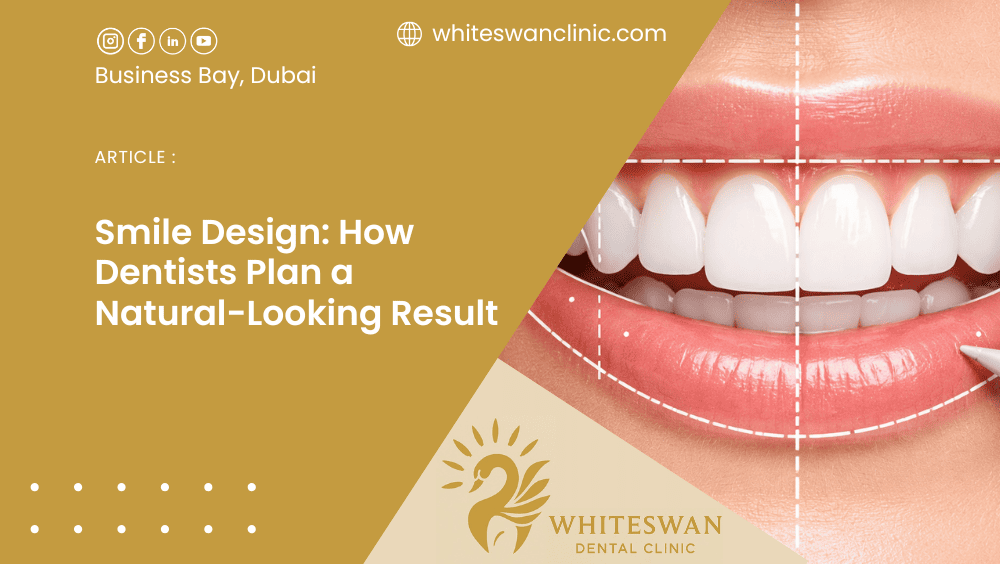
When people hear “smile design,” sometimes they think super-white, copy-paste teeth. Honestly, that’s not the goal. The best result will be super natural, fits your face, and feels comfortable when you are talking, laughing, or eating. In other words, it should still be you — just healthier and cleaner and more balanced.
Everything at White Swan Dental Clinic is so prepared that a design smile would be planned before any damage. And that prep work is what gives the final product a real, not “too perfect” look.
What Exactly Is Smile Design?
Smile Design (also known as Digital Smile Design) is a customized plan that dentists follow to enhance your smile methodically. It’s not one single treatment. It’s a guide that may contain, instead:
- Teeth whitening
- Composite bonding
- Porcelain veneers
- Dental crowns
- Clear aligners (orthodontics)
- Gum contouring
- Implants or other tooth replacement options
However, the biggest part is not the treatment list. It’s the analysis of your face shape, lip movement, tooth proportions, gum line and bite.That’s why, when implemented properly, smile design can appear subtle and natural. Looking for a Dental Clinic in Business Bay?
Who Usually Needs Smile Design Planning?
You don’t need “bad teeth” to benefit from a smile plan. Most people just want little tweaks that are huge improvements. For example:
- Teeth that are stained, patchy, or uneven in colour
- Chips or worn edges (common if you grind your teeth)
- Gaps between front teeth
- Mild crowding or teeth that look slightly twisted
- Old fillings that look dark at the edges
- Uneven gum line or a gummy smile
- Missing teeth that break the balance of the smile
And yes, sometimes it’s just one tooth that ruins the photo. It happens.
Step 1: The Consultation (Where Dentists Listen First)
A proper smile makeover doesn’t start with “pick veneers.” It starts with questions.
Most dentists will ask things like:
- What do you dislike most about your smile?
- What kind of result do you want—subtle or dramatic?
- Do you prefer a bright Hollywood shade or a softer natural one?
- Is there something you’re not looking for (i.e. very square teeth)?
They also examine your overall oral health. Because if you have inflamed gums, or hidden decay, any cosmetic work will be short-lived. So, health comes first, always.
Step 2: Face and Lip Analysis
Here’s the part many people don’t realise: dentists don’t design a smile while you’re sitting there with your lips stretched open. They also study your smile naturally.
They look at:
1) Your facial proportions
A smile should match your face. If you have softer features, super sharp teeth may look odd. On the other hand, stronger facial lines can suit slightly bolder tooth edges.
2) How your lips move
Your lips frame your teeth. So dentists check how much tooth shows:
- when you are relaxed
- when you speak
- when you laugh properly
This matters a lot, because a smile that looks nice in one photo might look strange while talking, if it isn’t planned properly.
3) Your smile curve
A natural smile usually follows the curve of the lower lip. When this curve is respected, the smile looks “right,” even if people can’t explain why. Get details on Dental Checkup in Business Bay.
Step 3: Photos, 3D Scans, and Bite Records
Modern Digital Smile Design uses detailed records to avoid guesswork. Typically, this includes:
- Clear photos (front, side, close-up)
- Digital scans (3D impressions, no messy moulds)
- X-rays (and sometimes 3D scans if needed)
- Bite checks to see how teeth come together
This is where planning becomes very accurate. Plus, it helps you see what is possible before you commit.
Step 4: The Real Rules Behind a Natural-Looking Smile
A natural smile isn’t about “perfect teeth.” It’s about balance and tiny details. Dentists usually plan using:
Tooth proportions
Front teeth need the right width and length. If teeth become too long, they can look horsey (sorry, but it’s true). If they become too wide, they look like blocks.
Midline (the centre line)
Dentists check the centre of your front teeth and compare it with your facial centre. Still, a small shift can be totally normal. In fact, forcing perfection sometimes makes a smile look less natural.
Tooth shape
Teeth can be more rounded, more square, or a mix. A skilled dentist chooses shapes that suit your age, face, and smile personality.
Natural texture
Real teeth aren’t flat and glossy like tiles. Good veneers and crowns include subtle texture and a bit of translucency near the edges. That’s one of the biggest reasons premium work looks realistic. Looking for a Root Canal Treatment in Business Bay?
Step 5: Shade Selection (Whiter Isn’t Always Better)
This is where some smiles go wrong. People choose a shade that is too white for their skin tone, and then the teeth steal the whole face.
Dentists usually consider:
- your skin tone and undertones
- your eye colour
- your age (very bright shades can look unnatural)
- the colour of existing teeth (for matching)
Often, whitening is recommended first. Then restorations like veneers or crowns are matched to your improved shade. That way, everything blends better.
And yes, many people search for teeth whitening in Dubai, but the truth is: planning the shade properly is more important than just going “whitest possible.”
Step 6: Gum Line Planning (The Quiet Hero of Smile Design)
Even beautiful teeth can look “off” if gums aren’t even. So dentists also plan the gum frame.
They check:
- Are gum levels balanced left and right?
- Is there extra gum showing when you smile?
- Is there a gum recession that needs treatment first?
In some cases, they may be included before cosmetic work in the patient’s plan, depending on what is needed (gum contouring or gum therapy). It’s not beautiful, but it gives the end product a clean and symmetrical appearance. Get details on Teeth Cleaning and Polishing.
Step 7: Bite and Function (Because Pretty Teeth Should Survive)
A smile is not just for selfies. You chew with it every day. So dentists must evaluate:
- grinding or clenching habits
- worn teeth and stress fractures
- jaw comfort and bite movement
- uneven contact points
If bite problems are ignored, veneers can chip, crowns can crack, and you’ll feel annoyed later. Therefore, in many cases, dentists recommend aligners first, then bonding/veneers after. It takes longer, yes—but it’s usually smarter.
Step 8: Mock-Up / Trial Smile
This is the step patients love the most.
A good clinic may offer:
- a digital preview
- a wax-up model
- a temporary mock-up placed on your teeth
So you can actually visualize the new shape and length before you have any permanent work done. And you can say things like:
- “These look a bit long for me.”
- “Can we soften the corners?”
- “I want it natural, not shiny.”
That feedback changes everything. And it prevents regret. Looking for a General Dentistry in Business Bay?
Treatments Commonly Used in Smile Design
Different people need different combinations. Here are the common choices:
Composite bonding
Perfect for small chips, minor gaps, and edge reshaping. It’s quick and conservative. When done well, it looks very natural.
Porcelain veneers
Best for shape change, stronger colour correction, and a more uniform look. However, veneers need careful planning so they don’t look thick or bulky.
Crowns
Used when a tooth is weak, heavily filled, or badly damaged. Crowns are strong, but the bite planning must be spot on.
Clear aligners
Great when teeth need repositioning first. Aligners can reduce the amount of tooth trimming needed later, which is a big advantage.
Gum contouring
Helpful for uneven gum heights or gummy smiles. It improves symmetry fast when it’s the right case.
Related Articles:
» Smile Makeover in Dubai: What’s Included and How Long It Takes?
» Teeth Shifting After Braces: How to Prevent Relapse?
» Retainers: Types and How Long You Must Wear?
» Veneers vs Bonding: Which Smile Makeover Suits You?
» Early Signs of Tooth Decay You Shouldn’t Ignore
How Long Does Smile Design Take?
It depends on what you need.
- Whitening + bonding: often 1–2 visits
- Veneers: typically 2–3 visits plus planning time
- Aligners: usually several months
- Complex cases (bite + missing teeth): personalised timelines
If your dentist is rushing you into permanent work in one visit, that’s usually a red flag. Natural results take planning.
Keeping Your Smile Design Result Looking Great
A smile upgrade lasts longer with basic habits:
- brush gently with a soft brush
- floss daily (yes, even with veneers)
- avoid chewing ice and hard objects
- use a night guard if you grind
- visit for polishing and check-ups
Also, don’t overuse whitening products after veneers. (If you’re not careful, you can end up with uneven shades because veneers don’t whiten.)
FAQs: “Smile Design & Natural-Looking Smile Makeovers”
It is a personalized approach to enhance the formation of teeth, colour, alignment and shape for more naturally appearing results.
It’s a type of smile planning involving photos, digital scans and measurements to get a preview of results before treatment begins.
No. Some cases only require whitening, bonding, aligners or gum contouring.
By mixing up the right proportions, shade, translucence and texture of a given tooth — not just bleach it.
Gaps may be closed with bonding, veneers, aligners or combination treatment.
Most steps are comfortable. Most treatments make use of local anaesthetic and any sensitivity is short-lived.
With appropriate care, veneers will last for several years. Grinding and bad bite habits can shorten lifespans.
In general, yes — especially if you’re after a lighter overall color. It helps colour matching.
Yes. Gum contouring, orthodontics or other procedures may be used to eliminate that gummy look.
Yes, though you’ll have a bite check and night guard may be suggested post-treatment.
They are considerate of skin tone, age, facial structure and current tooth colour for a natural match. gummy appearance.
Select a clinic with digital planning, mockups, good explanations and natural aesthetics as well as bite health.