
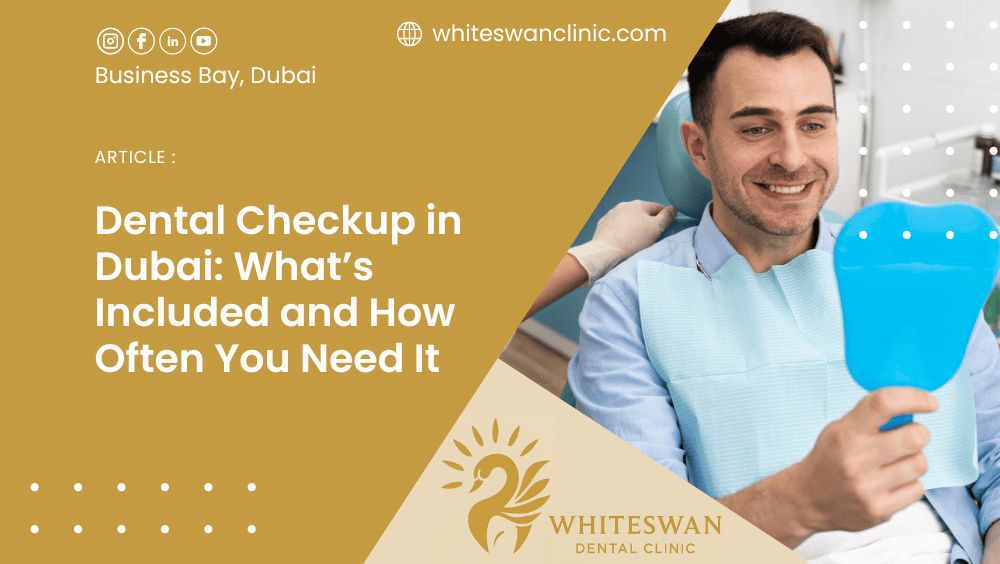
A dental visit in Dubai involves more than just a glance at your teeth. It’s a preventive visit that helps keep you out of sudden pain, unexpected costs and last-minute treatments. Routine checkups generally involve a full oral exam, an evaluation of your gums and a professional cleaning — as well as, in some cases, dental X-rays. When you leave, it’s with a clear plan, not confusion.
Even if they feel “fine,” issues might be quietly spreading. So rather than waiting for the toothache, it’s better to get ahead.
Why a Regular Dental Checkup in Dubai Is Worth It
Dubai life stays busy, and dental visits often drop to the bottom of the list. But cavities and gum disease do not wait for schedules. They begin small and then, all of a sudden, are big.
A routine dental checkup helps you:
- Catch decay early, before it reaches the nerve
- Check gum health before you lose bone support
- Check previous fillings, crowns and veneers
- Helps to eliminate bad breath due to plaque and gum disease
- Avoid emergencies by treating early
And if you wear aligners, have implants or grind your teeth, regular scans ensure everything is on the straight and narrow. In other words, preventive care is good for both your smile and your wallet. Looking for a Dental Clinic in Business Bay?
What’s Included in a Dental Checkup in Dubai?
There’s some variation from clinic to clinic, but one quality checkup is followed closely by all others. Here’s what you generally can expect.
1) Health & Dental History Update
To begin with, the team inquires about your health and habits. This step is important because it affects your care.
You may be asked about:
- Current medications and allergies
- Pregnancy, diabetes, blood pressure, or other conditions
- Smoking or vaping
- Tooth sensitivity, bleeding gums, bad breath, or jaw pain
- Past dental work (crowns, root canals, implants, braces)
After that, your dentist can tailor the checkup properly instead of making guesses.
2) Full Mouth Examination (Teeth + Bite + Soft Tissue)
Then, your dentist exams each tooth and the surrounding areas.
They look for:
- Cavities, cracks, worn edges, and defective fillings
- Signs of infection or swelling
- Bite problems (how your teeth meet)
- Cheek, tongue, and palate health
- Changes that don’t look normal
This part may seem basic, but it’s extremely important. Even the tiniest of cracks can develop into large fractures later on — especially if you clench. Get details on Dental Checkup in Business Bay.
3) Gum Check (Periodontal Screening)
Gum problems often cause trouble without obvious pain. That’s why dentists take gum checks seriously.
During a gum screening, the dentist may:
- Measure gum pocket depth
- Check bleeding points and inflammation
- Look for gum recession and sensitivity spots
- Identify tartar buildup near the gumline
if your gums bleed when you brush your teeth it is almost always a warning sign—and not easy to dismiss as just a “normal thing.” Fortunately, early gum issues are both highly treatable and manageable with improved home care.
4) Professional Cleaning: Scaling and Polishing
Many people book a checkup mainly to get that fresh, clean feeling. And yes, professional cleaning truly helps.
A standard cleaning includes:
- Scaling: removing plaque and hardened tartar
- Polishing: smoothing tooth surfaces to reduce plaque sticking
- Guidance on brushing and flossing based on your mouth type
Sometimes, you may need a deeper gum-cleaning plan. However, a regular clean still gives you a strong starting point.
5) Dental X-Rays (When Needed)
Not every visit requires X-rays. Still, they help your dentist see what the eyes can’t.
X-rays may be recommended if:
- You have pain, swelling, or sensitivity
- You get frequent cavities
- You have many fillings or crowns
- The dentist suspects decay between teeth
- Wisdom teeth issues might be present
- Gum disease signs appear
And so, they are not “mandatory every time,’’ but do matter in those correct situations.
6) Oral Cancer Screening
Most clinics do a short soft-tissue examination. It’s quick, but it is important — especially if you smoke or vape or have recurrent ulcers. If your dentist notices something unusual, they will take you through the next step. Looking to a Best Dental Clinic for Teeth Filling?
7) Personalised Plan + Next Steps
Finally, you should leave with clarity.
A good checkup ends with:
- What’s healthy right now
- What needs treatment soon
- What can safely wait
- A suggested timeline and priorities
- Home-care tips tailored to you
How Often Do You Need a Dental Checkup?
People often hear “every 6 months.” That’s a good average, but it’s not one-size-fits-all. Your schedule depends on risk.
Most Adults: Every 6 Months
For most adults, a checkup at the dentist every six months is good. You receive regular cleanings, early detection and fewer surprises.
Low-Risk Patients: Every 9–12 Months
If you don’t have cavities, your gums are healthy and you keep up with good daily home care, it may be once a year. And yet, tartar can accumulate even with the best brushing so don’t wait too long to do it.
Higher-Risk Patients: Every 3–4 Months
You may need more frequent visits if you have:
- Gum disease or frequent gum bleeding
- Diabetes or immune concerns
- Smoking/vaping habit
- Dry mouth (often due to medication)
- Braces or aligners
- A history of many fillings, crowns, or root canals
- Pregnancy-related gum changes
In addition, regular checkups prevent emergencies abroad if you travel a lot for work in Dubai. Get details on Teeth Cleaning and Polishing.
What Happens When You Skip Checkups Too Long?
This is the tricky part: dental problems often don’t hurt at first.
When you delay checkups:
- A tiny cavity becomes deep decay
- Gum inflammation turns into gum disease and bone loss
- Old fillings leak and decay grows underneath
- Cracks spread until the tooth breaks
So even if you think your smile is fine, something could be going on under the surface. Looking to a Best Clinic for Tooth Removal?
How to Prepare for Your Checkup
A little prep makes the visit easier:
- Bring your list of medications (or a photo)
- Mention pregnancy, diabetes, or heart conditions
- Let the dentist know if you start to feel anxious (they can slow down)
- Describe your primary complaint in detail (cold sensitivity? chewing pain?)
- If you have insurance, bring the details early
Most importantly, don’t be embarrassed about dental gaps. Dentists look at the worst of people every day, and they focus on solutions.
Related Articles:
» Wisdom Tooth Pain: Removal Timing & Recovery
» Receding gums: Treatments that work
» Implant Maintenance: Hygiene Tips for Long-Term Success
» Dental Implants in Dubai: Step-by-Step Process
» When to Replace Old Fillings: Signs You Shouldn’t Ignore
What You Can Do Between Visits (Simple Habits That Help)
Your dentist may recommend:
- Brush with fluoride toothpaste twice a day
- Floss daily (or use interdental brushes)
- Protect gums with soft brush
- Consider a night guard if you grind
- Reduce frequent sugary snacks (snacking frequency matters a lot)
Small daily habits beat “intense” brushing once a week. Consistency wins here.
FAQs on “Dental Checkup in Dubai: How Often You Need It”
A dentist in Dubai typically offers dental checkup service that provides an oral examination, gum evaluation, cleaning (scaling and polishing) as well as dental X-rays if it is required.
Frequently yes, but heavy tartar build up or gum disease may need more sessions or separate ones.
Most checkups take 30–60 minutes, depending on the amount of cleaning needed and whether X-rays are required.
Not always. Your dentist recommends X-rays depending on your symptoms, risk level and dental history.
For most adults, this is every 6 months. Higher-risk patients might require every 3–4 months.
Usually no. But if it’s a heavy tartar, the inflamed gums can still be very sensitive during cleaning.
Bleeding often indicates gum inflammation. Bleeding typically improves with treatment and increased at-home care.
Yes, routine preventive care such as checkups and cleanings is usually considered safe. Just let your dentist know so they can plan accordingly.
Sometimes yes. Orthodontic fixtures can catch plaque, so a shorter interval may be advised by dentists.
Yes. Pocket measurements and gum screenings can detect gum disease even before loose teeth become apparent to you.
Your dentist also should make urgency a priority, while describing what can wait and what must be treated immediately.
Preventive visits should begin as soon as the first tooth comes in and proceed according to a recommended schedule (usually every 6 months).