
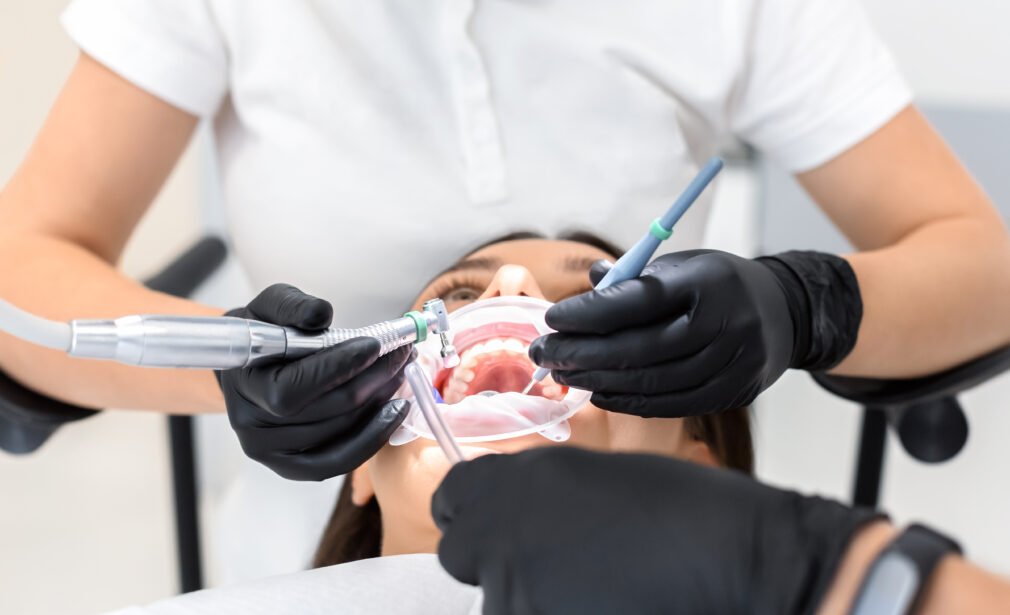
Dental Scaling in Dubai
What Is Dental Scaling?
Dental scaling is the professional removal of plaque and tartar, also called calculus, from tooth surfaces and, where needed, around the gum-line. Plaque is a sticky bacterial film that forms every day. You can remove most of it with thorough brushing and inter-proximal cleaning, but once plaque hardens into tartar, ordinary brushing cannot remove it.
Specialized instruments lift these deposits without intentionally removing healthy tooth structure. An ultrasonic scalar may loosen tartar using rapid vibrations and water; hand instruments help clean areas that need more precise attention.
Teeth scaling is often part of a routine cleaning appointment. However, if gum disease has created deeper pockets around the teeth, treatment may need to extend beneath the gum-line to clean affected root surfaces. That is a different level of care, determined after examining your gums.
The purpose is healthier, easier-to-clean surfaces, not simply teeth that look whiter
Why Do You Need Dental Scaling?
Even with a good brushing routine, plaque can collect in awkward spots, particularly behind the lower front teeth, between crowded teeth, and along the gum-line. Minerals in saliva can harden it into tartar, creating a rough surface where more plaque accumulates.
That buildup matters because plaque bacteria irritate the gums. Early inflammation, called gingivitis, can cause redness and bleeding. If the disease progresses to periodontitis, it can damage the supporting tissues and bone around the teeth.
Scaling removes deposits that home care cannot shift, making daily plaque control more effective. It may also reduce bad breath by improving bacterial control, alongside better brushing and inter-dental cleaning.
Professional treatment does not replace what you do at home. Lasting benefits come from removing existing deposits and reducing the conditions that allow them to return.
Signs You May Need Dental Scaling
Tartar is not always obvious, especially when it collects close to or below the gum-line. Consider arranging a dental assessment if you notice:
- Bleeding when brushing or flossing, even with little or no pain.
- Red, puffy or tender gums rather than firm, comfortable gum tissue.
- A hard yellowish or brown deposit near the gum-line or behind the lower front teeth.
- Persistent bad breath or an unpleasant taste that does not improve with normal cleaning.
- Gums that appear to pull away from teeth, or teeth that seem longer than before.
- Food trapping or a rough feeling around teeth despite brushing carefully.
These signs do not mean scaling alone will help. Loose teeth, significant swelling, or pus need prompt assessment. A dentist can determine whether you need routine dental scaling in Dubai, deeper periodontal treatment, or another type of care.
Dental Scaling vs Regular Cleaning and Polishing
People often use “scaling”, “cleaning” and “polishing” to mean the same appointment. They are related, but each step serves a different purpose.
Dental scaling removes plaque and hardened tartar from the teeth and gum-line. It is the essential deposit-removal step when calculus is present. Depending on gum health, scaling may involve accessible surfaces and slightly below the gum margin, or more extensive cleaning as part of periodontal treatment.
Regular cleaning and polishing combine the necessary cleaning steps with polishing where suitable. Polishing can help remove some external stains caused by tea, coffee, or tobacco and make tooth surfaces feel smoother. It does not treat deep gum pockets, and it does not bleach the underlying color of natural teeth.
Deep cleaning, often called scaling and root planing, is specifically considered when gum disease affects tissues below the gum-line. It may take longer, need local anaesthesia and involve planned follow-up rather than a single routine visit.
At White Swan, Cleaning & Polishing is the relevant service for routine hygiene and surface-stain concerns. Scaling focuses on tartar removal and identifying deeper gum problems. The dentist can explain which treatment fits your findings rather than automatically recommending a more involved procedure.
Dental Scaling Procedure
Knowing what to expect can make the visit easier, especially if it has been a while since your last cleaning.
- Teeth and Gum Assessment. The dental professional checks plaque and tartar deposits, bleeding, gum condition, and any sensitive areas. If gum disease is suspected, pocket measurements and appropriate imaging may help establish its extent.
- Ultrasonic Scaling Where Appropriate. A vibrating instrument with a water spray helps loosen hardened deposits. You may hear a buzzing sound and feel cool water or gentle pressure. We select the device and technique for your teeth and restorations.
- Detailed Cleaning with Hand Instruments. Smaller tools can remove remaining deposits around gum margins, crowded teeth, or other areas requiring controlled access.
- Polishing When Suitable. If indicated, we may polish the teeth to reduce superficial staining and leave surfaces feeling smoother. This step is not the same as whitening.
- Personalized Home-Care Advice. You receive guidance on brushing, flossing, or inter dental brushes, areas that collect tartar, and whether a further review is needed.
A routine session may be completed in one appointment. Heavier deposits, sensitivity, or periodontal disease may require additional visits. Consider a Dental Checkup when appropriate.
Scaling and Root Planing for Gum Disease
If examination shows periodontitis, routine above-gum cleaning may not be enough. Bacteria and hardened deposits can collect on root surfaces inside deeper gum pockets, where a toothbrush cannot reach.
Scaling and root planing is a non-surgical treatment that removes these deposits from affected root surfaces and helps create conditions for inflamed gums to heal. Local anaesthesia may be offered for comfort, and treatment can be divided into separate visits depending on the areas involved.
Healing is assessed later through changes in bleeding, gum inflammation, and pocket measurements. Some patients need ongoing periodontal maintenance or specialist care; deep cleaning cannot reverse every effect of advanced bone loss.
A diagnosis comes first. Having tartar does not automatically mean you need root planing, antibiotics, or gum surgery. For broader management of diagnosed disease, ask about Gum Disease Treatment.
Is Dental Scaling Painful? Recovery and Aftercare
Routine scaling is generally manageable, although you may feel vibration, water spray, or occasional sensitivity. Tender gums, exposed roots, and heavy tartar deposits can make some areas more uncomfortable. Tell the dental professional if something hurts; they can discuss technique, breaks, or local anaesthesia when appropriate.
After cleaning, mild gum tenderness, slight bleeding, or sensitivity to cold may occur, especially if the gums were inflamed. These effects usually settle; root planing may take longer.
To care for your mouth afterwards:
- Brush gently twice daily using fluoride toothpaste, and clean between teeth as advised.
- Avoid scalding, cold, or acidic foods temporarily if your teeth feel sensitive.
- Follow any specific instructions about mouth rinses or medicines; do not self-prescribe antibiotics.
- Avoid tobacco and attend the recommended review if gum disease was treated.
Contact the clinic if bleeding persists, swelling worsens, or significant pain does not improve.
How Often Should You Get Dental Scaling?
Six-monthly cleanings are common, but there is no single correct scaling schedule for everyone. The right interval depends on tartar buildup, gum inflammation, previous periodontal treatment, smoking, oral hygiene, and medical factors that affect gum health.
Some people need more frequent professional maintenance, while others can safely have longer intervals between cleanings after assessment. Periodontitis may require a specific maintenance schedule and reviews to monitor pocket depths.
At a Dental Checkup, ask when your next cleaning is actually needed and which areas you should focus on at home. Regular review matters more than following a calendar automatically.
Dental Scaling Cost in Dubai
When comparing dental scaling cost in Dubai, check what the fee covers rather than relying on the lowest advertised amount. A routine scale-and-polish appointment is not equivalent to several sessions of deeper cleaning for diagnosed gum disease.
The total may depend on the amount of tartar, the length and complexity of treatment, whether gum measurements or X-rays are needed, and whether polishing, root planing, or follow-up is included. Clinics may charge separately for examination and cleaning.
Before treatment, ask whether your estimate covers the examination, scaling, polishing, if indicated, and any additional periodontal care. White Swan can confirm the appropriate fee after evaluating your oral health.
Insurance coverage varies by policy. Preventive cleaning may be included in some dental benefits, while deep periodontal treatment can have different limits, exclusions, or approval requirements. Check your plan and request an itemized estimate when needed.
Why Choose White Swan Dental Clinic
At White Swan Dental Clinic in Business Bay, dental scaling is part of a broader approach to preventive and gum care, not an automatic recommendation for the most intensive cleaning available.
The clinic offers routine Cleaning & Polishing, dental examinations, and gum-disease treatment options, allowing the assessment to distinguish surface buildup from more established periodontal problems. Its published information describes professional scaling instruments, hygiene and sterilization practices, individual treatment planning and a focus on patient comfort.
You should understand the findings, recommended cleaning, and home care. White Swan’s published team profiles also describe experience in preventive dental care, including scaling and polishing.
Conveniently located at The Citadel Tower, Office 2502, Business Bay, Dubai, White Swan also provides a practical option for people living or working in the surrounding area.
F.A.Q - Teeth Cleaning & Polishing
01. Does dental scaling damage teeth?
02. Is dental scaling painful?
03. How often should I get my teeth scaled?
04. What is the difference between scaling and cleaning?
05. Does scaling remove yellow stains?
Scaling removes tartar and may reduce staining attached to deposits. Polishing can remove some superficial stains, so teeth may look cleaner afterwards. Neither procedure changes the natural shade inside a tooth. If yellowing remains and your teeth and gums are healthy, discuss professional Teeth Whitening as a separate option.
06. Does insurance cover dental scaling?
Some UAE dental insurance plans include routine preventive scaling, but benefits vary by insurer, network, annual limit and treatment type. Scaling and root planing for gum disease may be covered differently or require approval. Check your policy and ask White Swan for an itemized treatment estimate and any documents needed for a claim.
Due for a cleaning? Book your dental cleaning and scaling appointment at White Swan Dental Clinic in Business Bay. Book an appointment or pair it with a routine dental checkup.